
Tags
Context
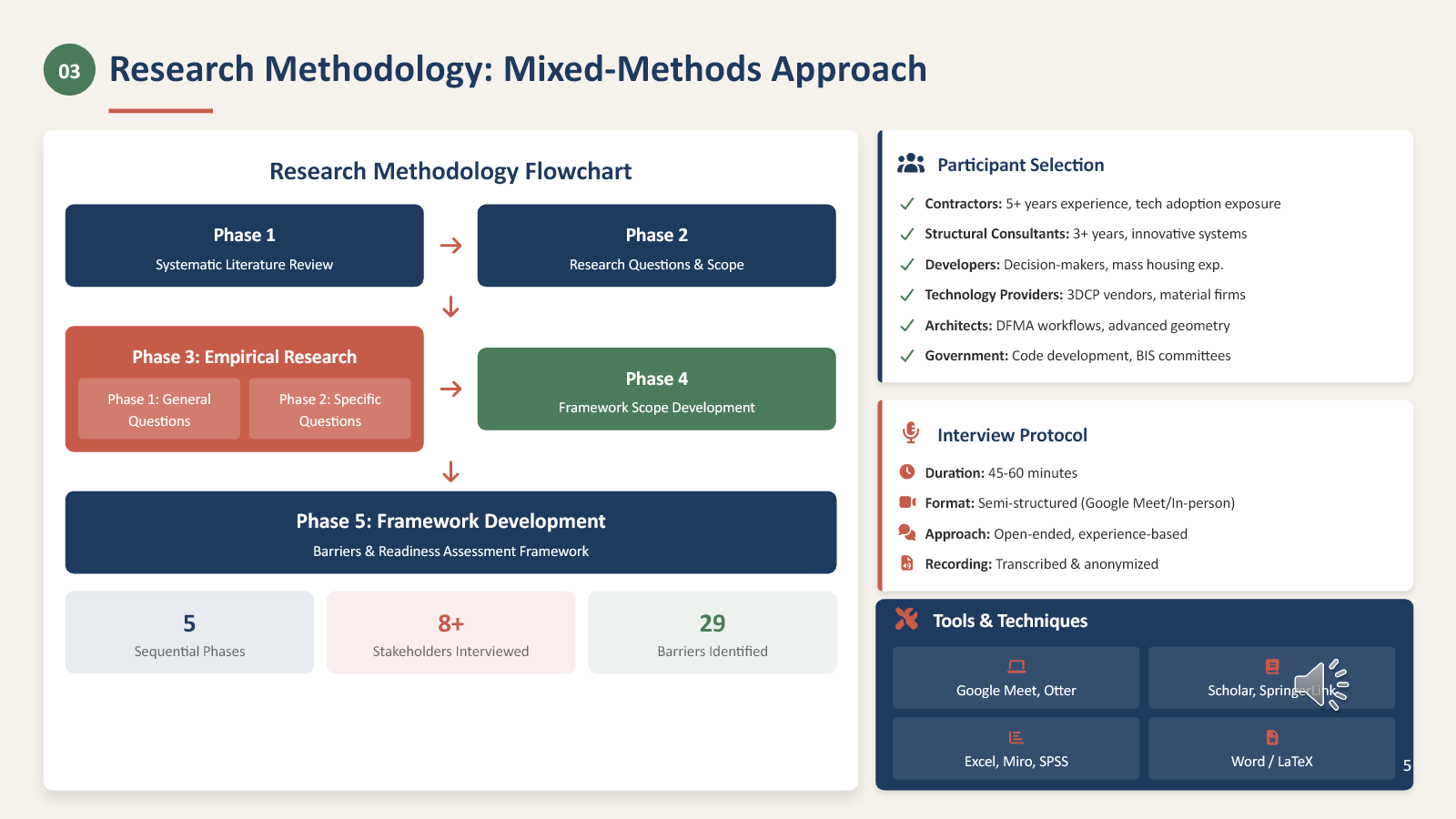
Madesai and BIMCrew formulated this CEPT University MSc Directed Research Project to examine 3D concrete printing adoption as a combined technical, constructability, economic, organisational, commercial, policy, and regulatory question. The project was undertaken by Tanmay Manishkumar Desai in the Master of Construction Engineering & Management programme. The supervision engagement began with the research question: how can organisations distinguish growing interest in 3D concrete printing from the practical readiness required for repeatable adoption in India?
The challenge
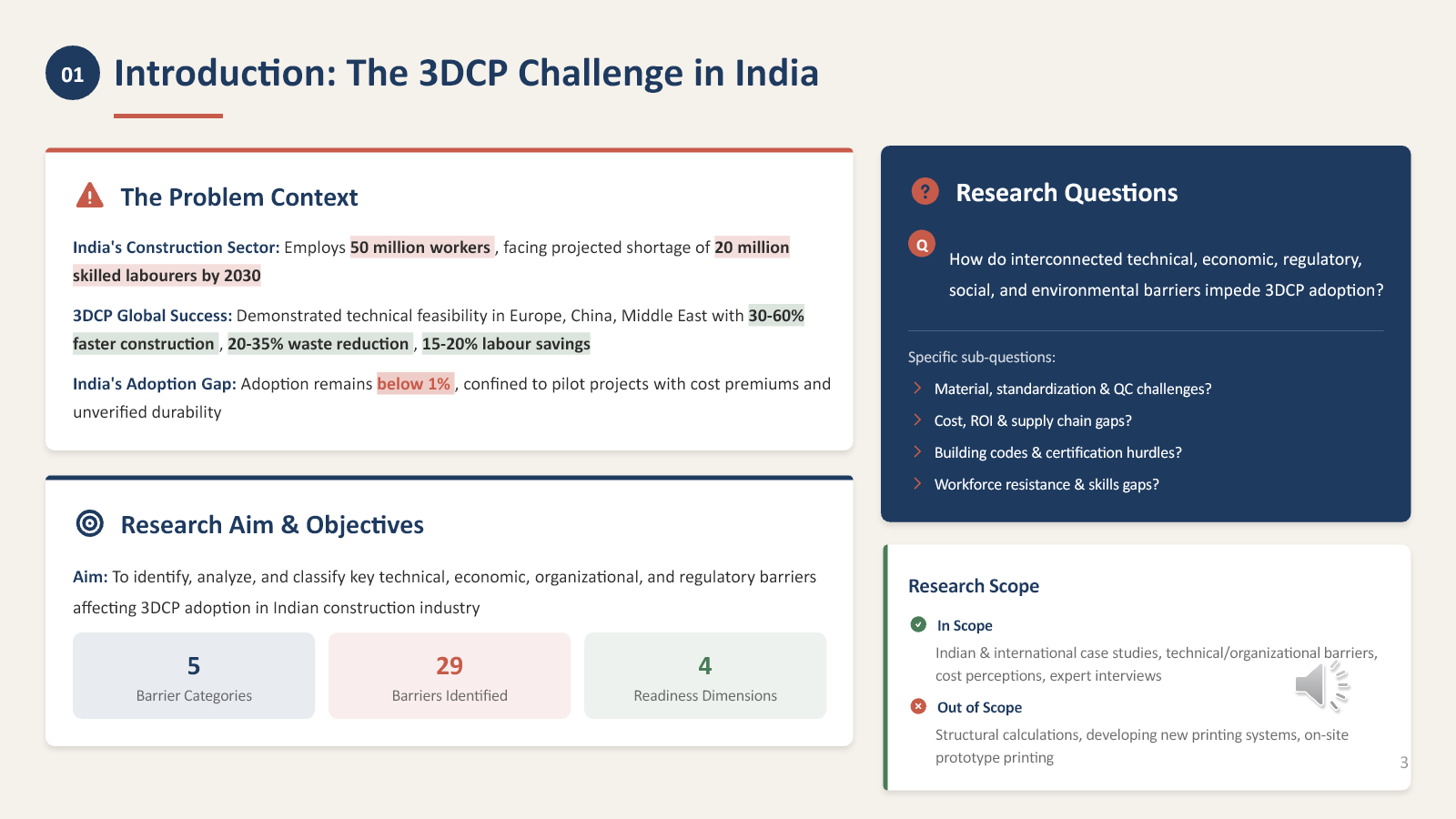
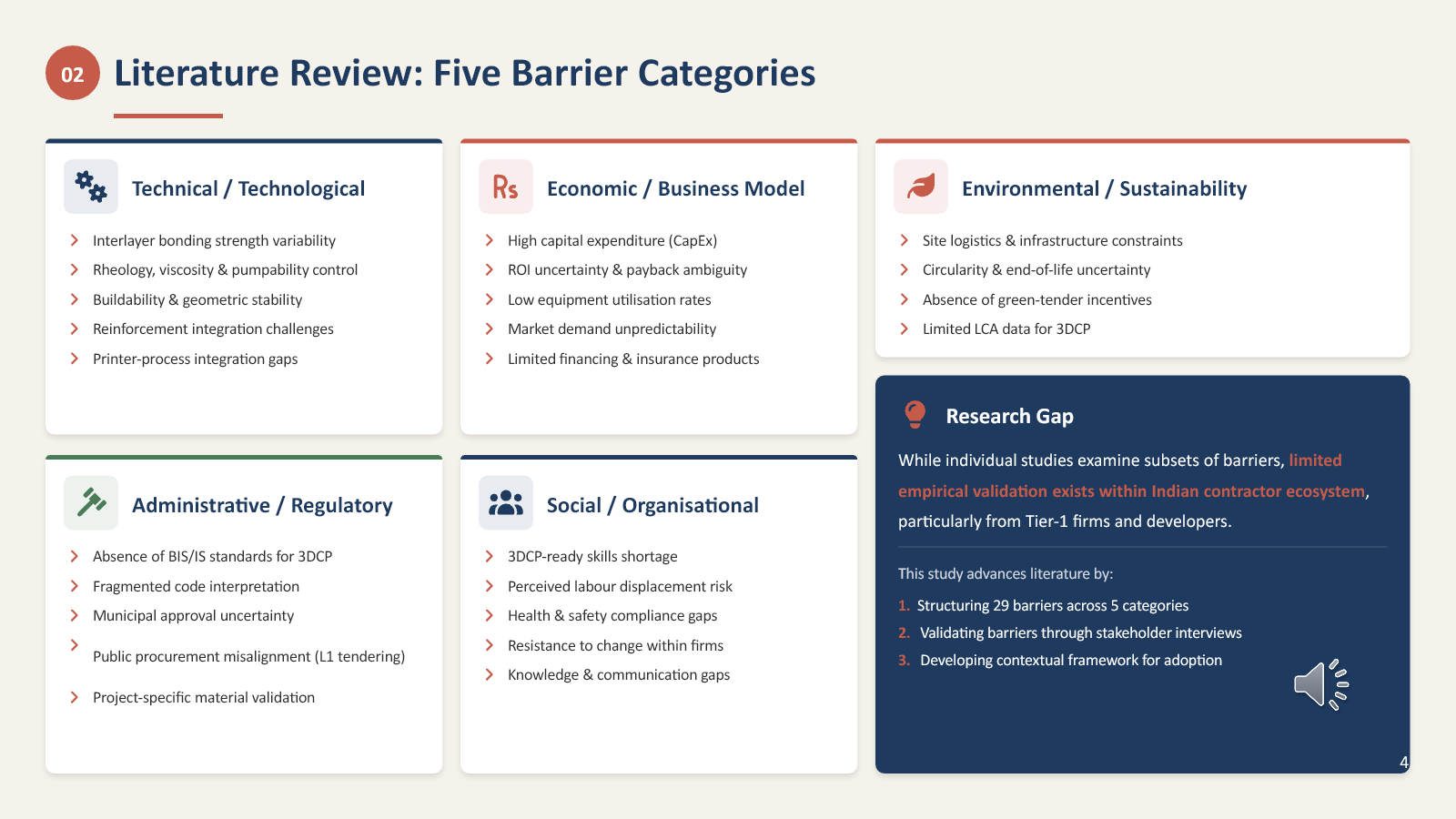
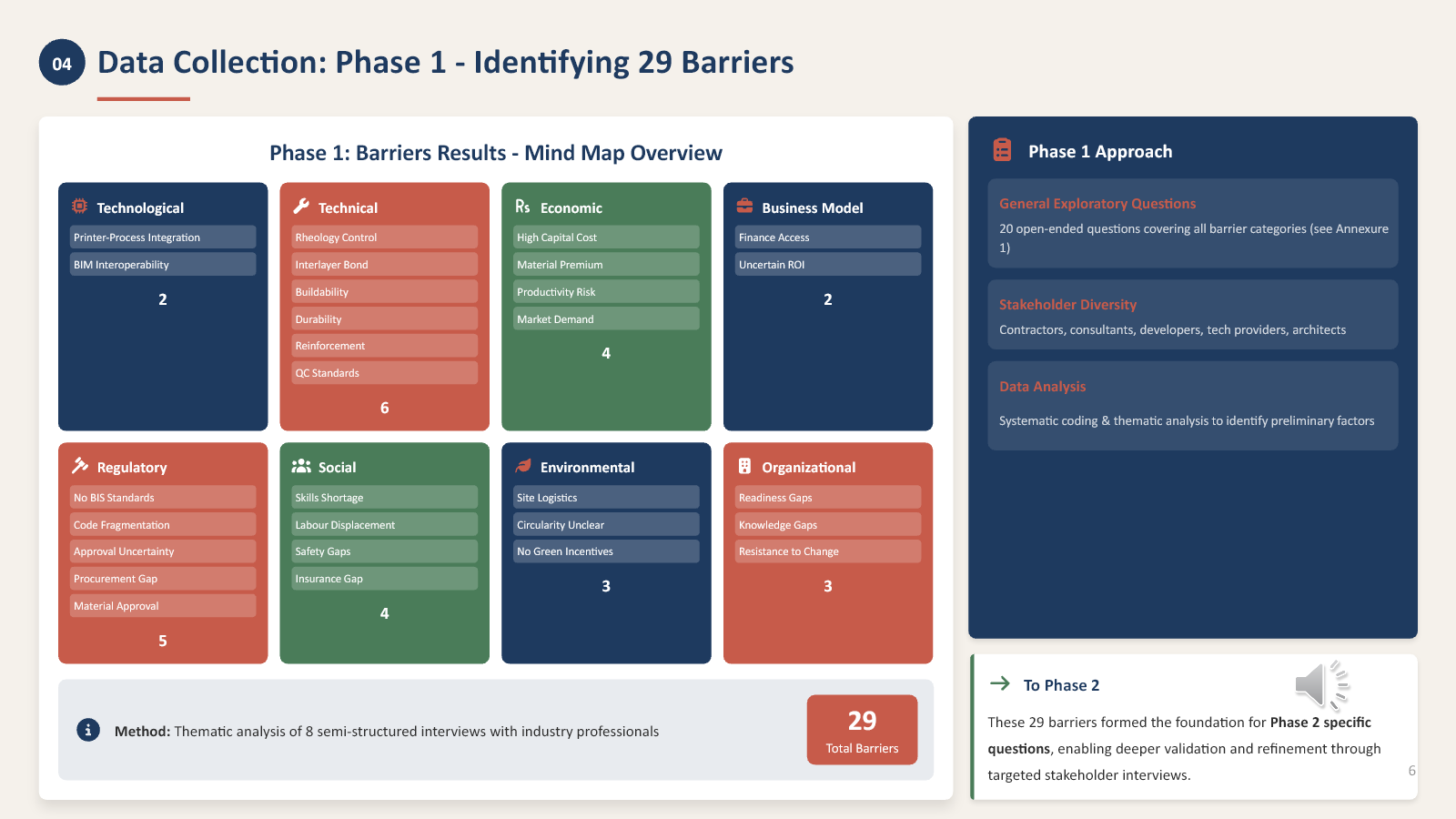
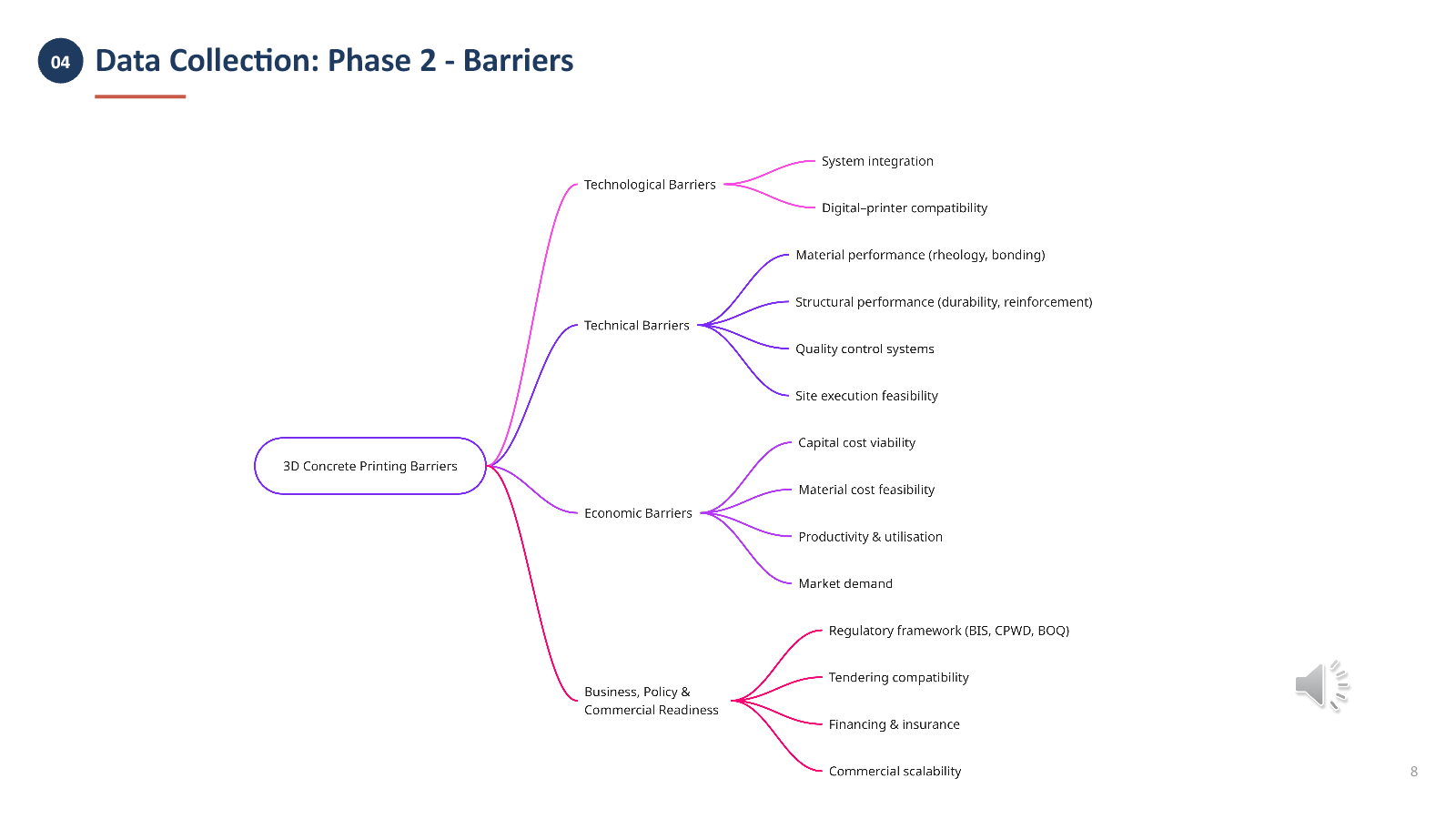
Adoption could not be evaluated through technology availability alone. A technically feasible printer or material system may still face constraints related to design integration, constructability, skills, operating models, investment confidence, project demand, certification, codes, stakeholder coordination, and commercial responsibility. The research challenge was to convert a broad and interconnected set of barriers into a structured method that could show where readiness was weak, how the dimensions influenced one another, and which stakeholders could act on the identified gaps.
MADESAI's role
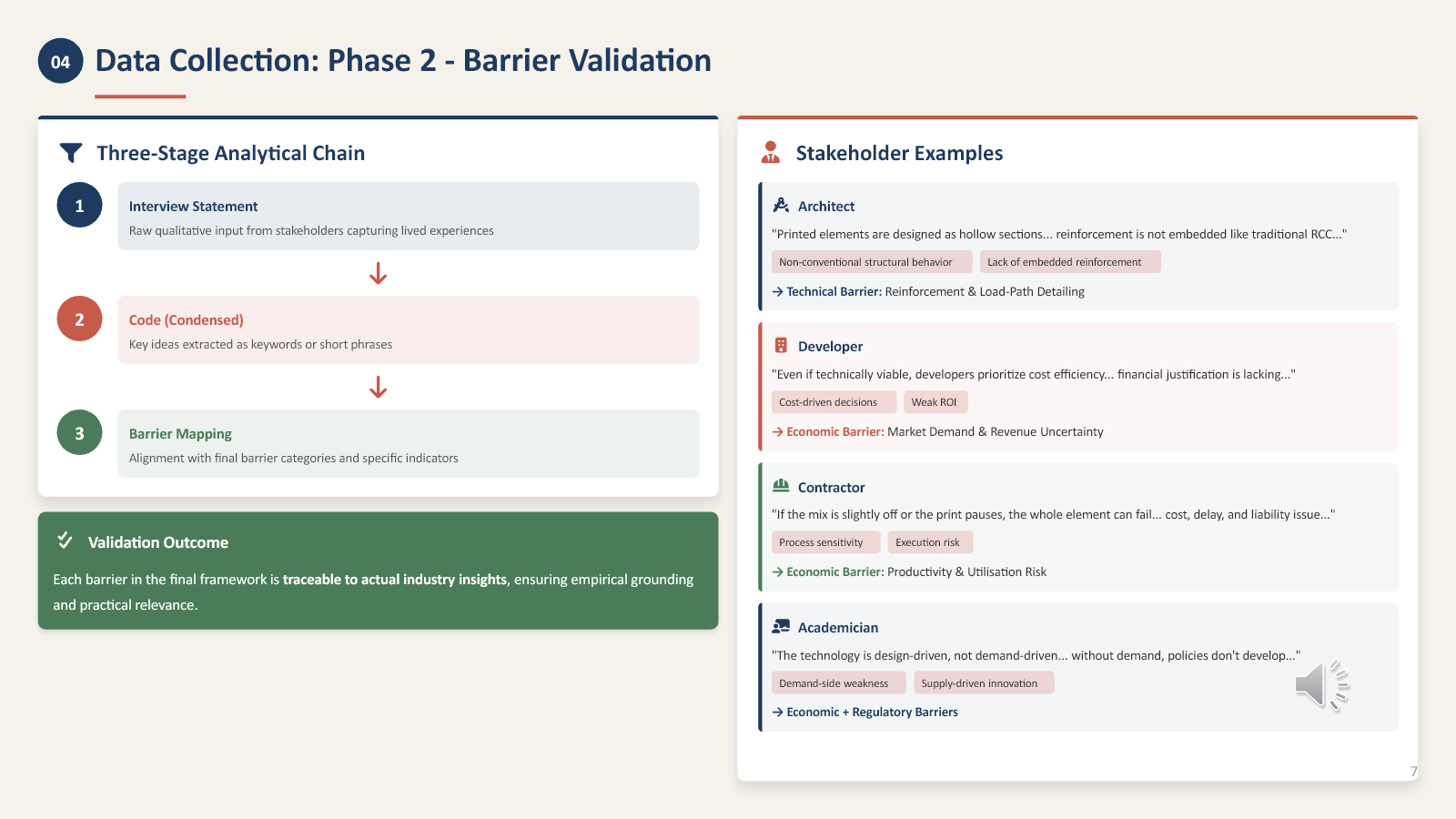
Madesai originated the research problem, translated it into the DRP brief with BIMCrew, and supervised the work from topic definition through final delivery. The role included defining the aim, scope, evidence expectations, and intended framework output; providing initial research direction; reviewing the commencement and interim submissions; coordinating regular progress discussions; guiding the mixed-method research structure; and directing the progression from barrier identification to readiness dimensions, indicators, scoring logic, stakeholder mapping, and intervention planning. Madesai also completed formal guide evaluations and reviewed the final report, synopsis, presentation, and packaged academic deliverables.
Outputs
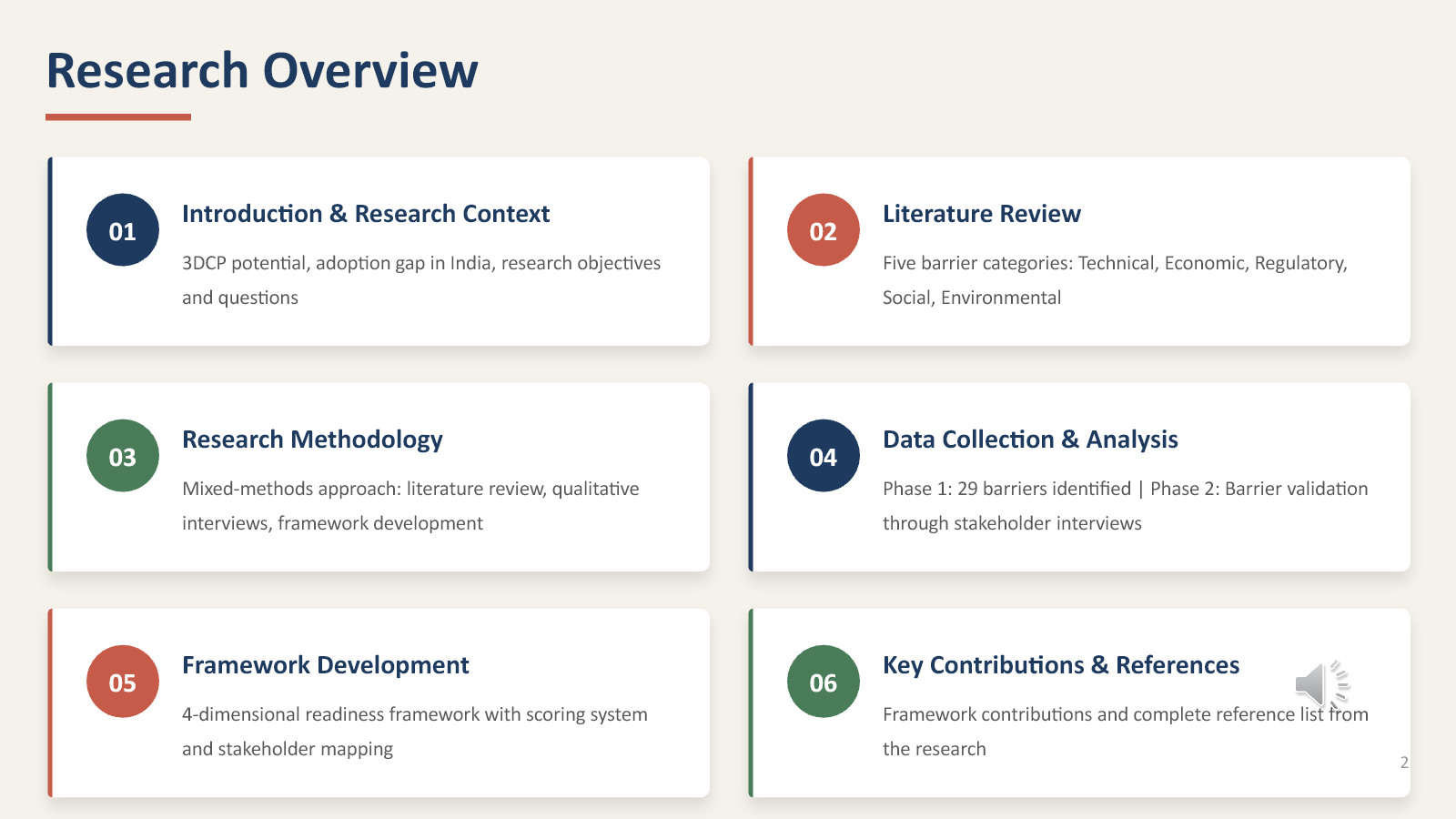
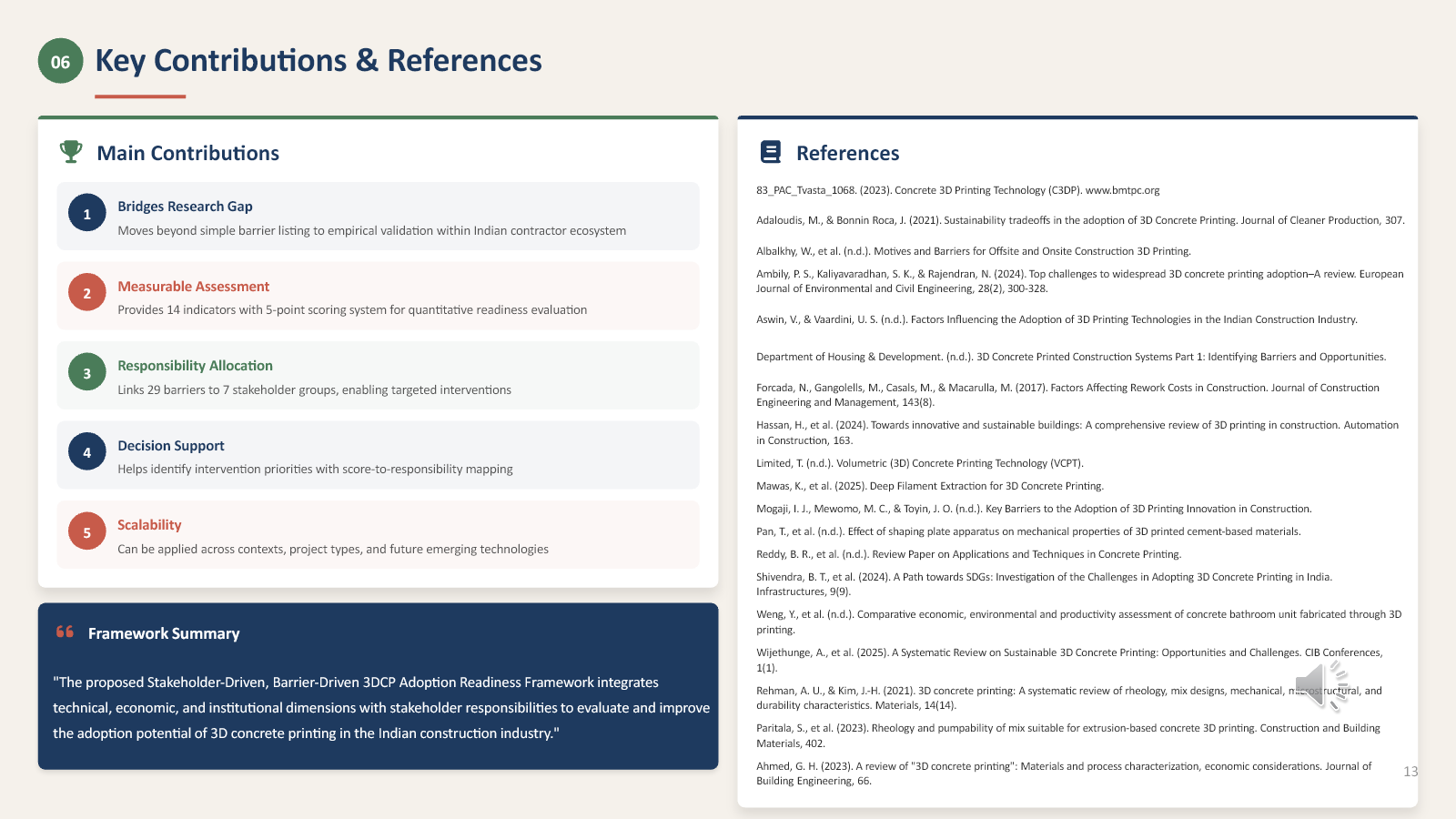
- Analysis of 29 barriers affecting 3D concrete printing adoption in India
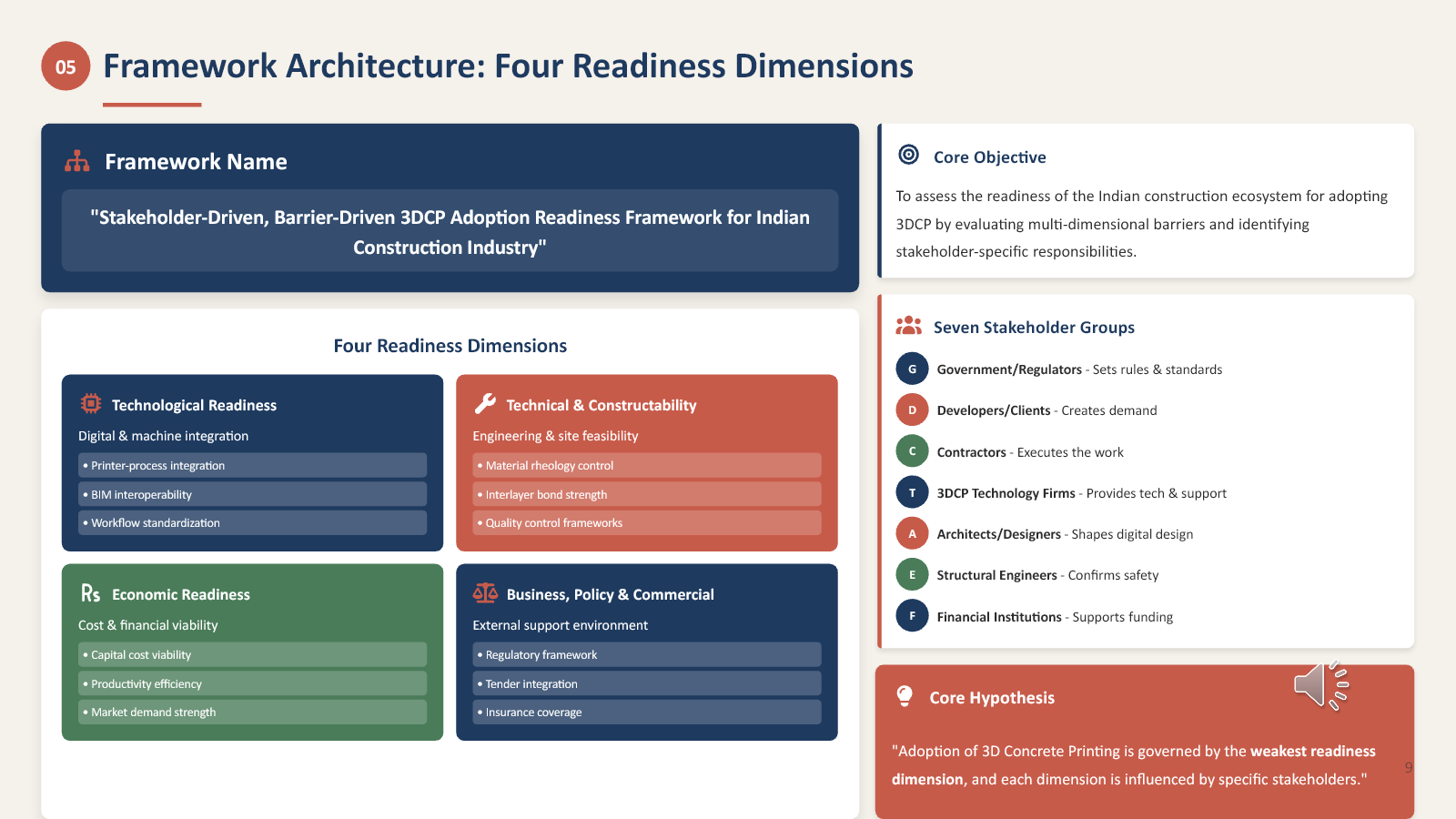
- Four readiness dimensions covering technical, constructability, economic, and ecosystem conditions
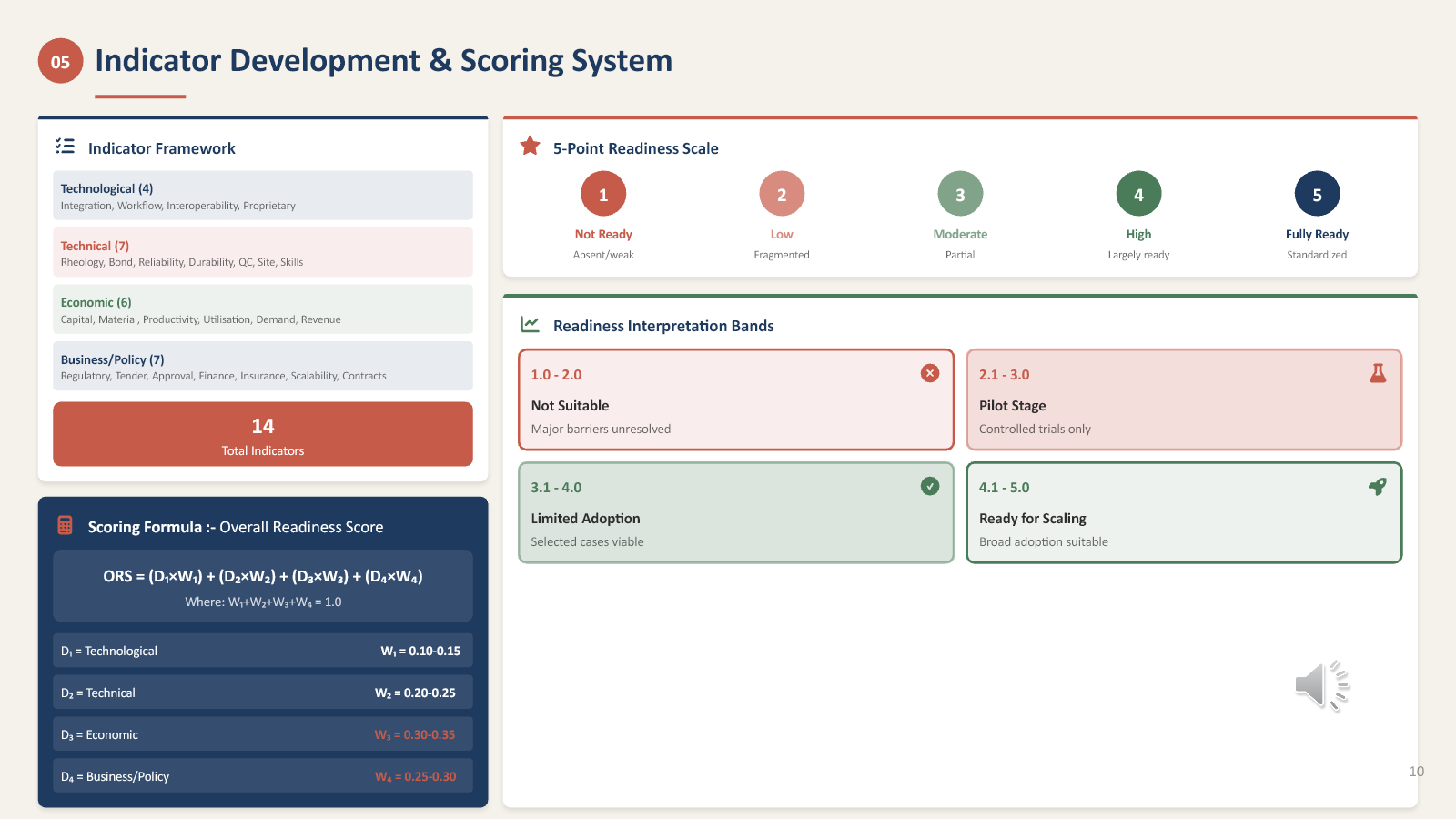
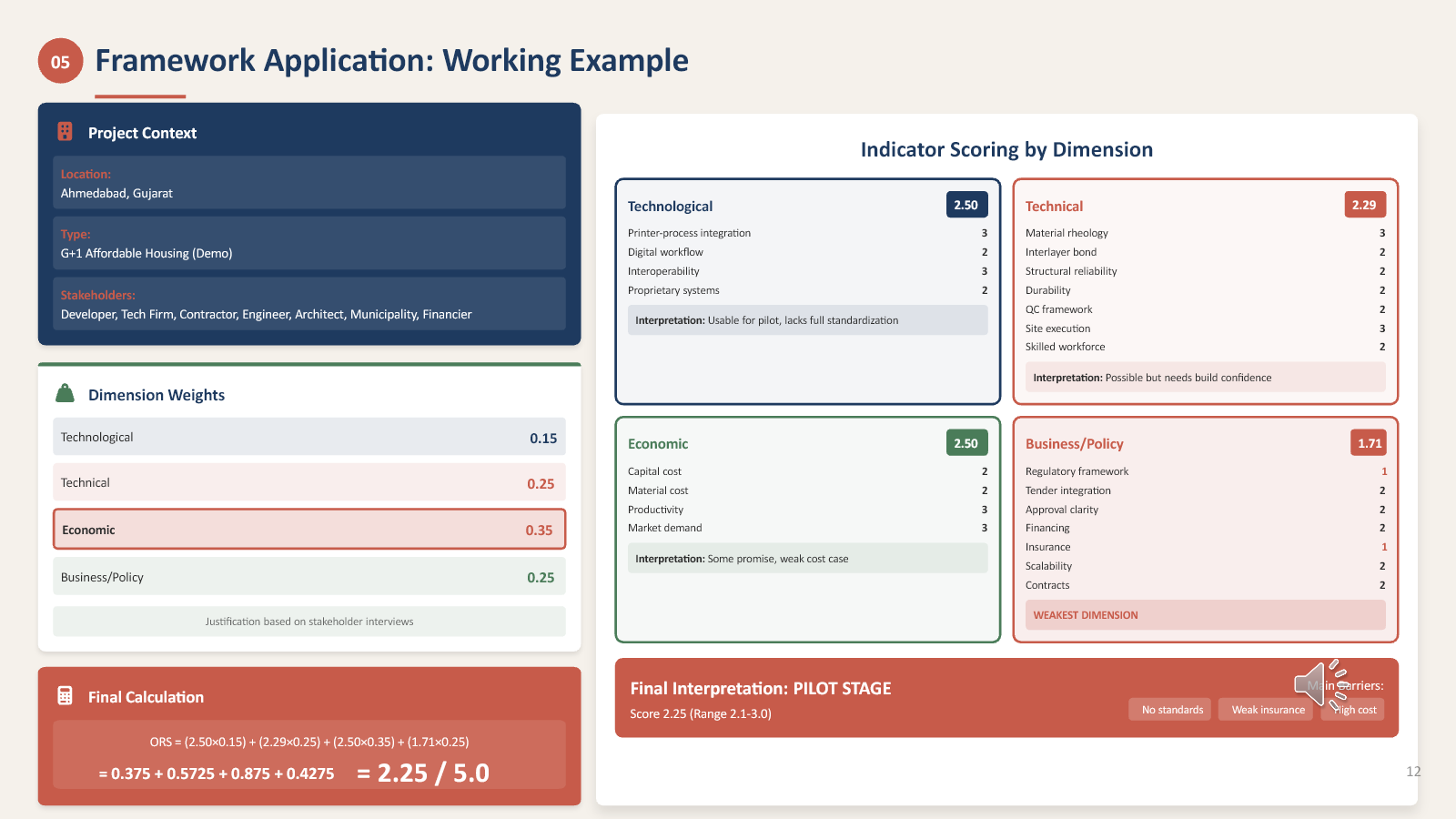
- Readiness indicators and scoring logic for identifying adoption gaps
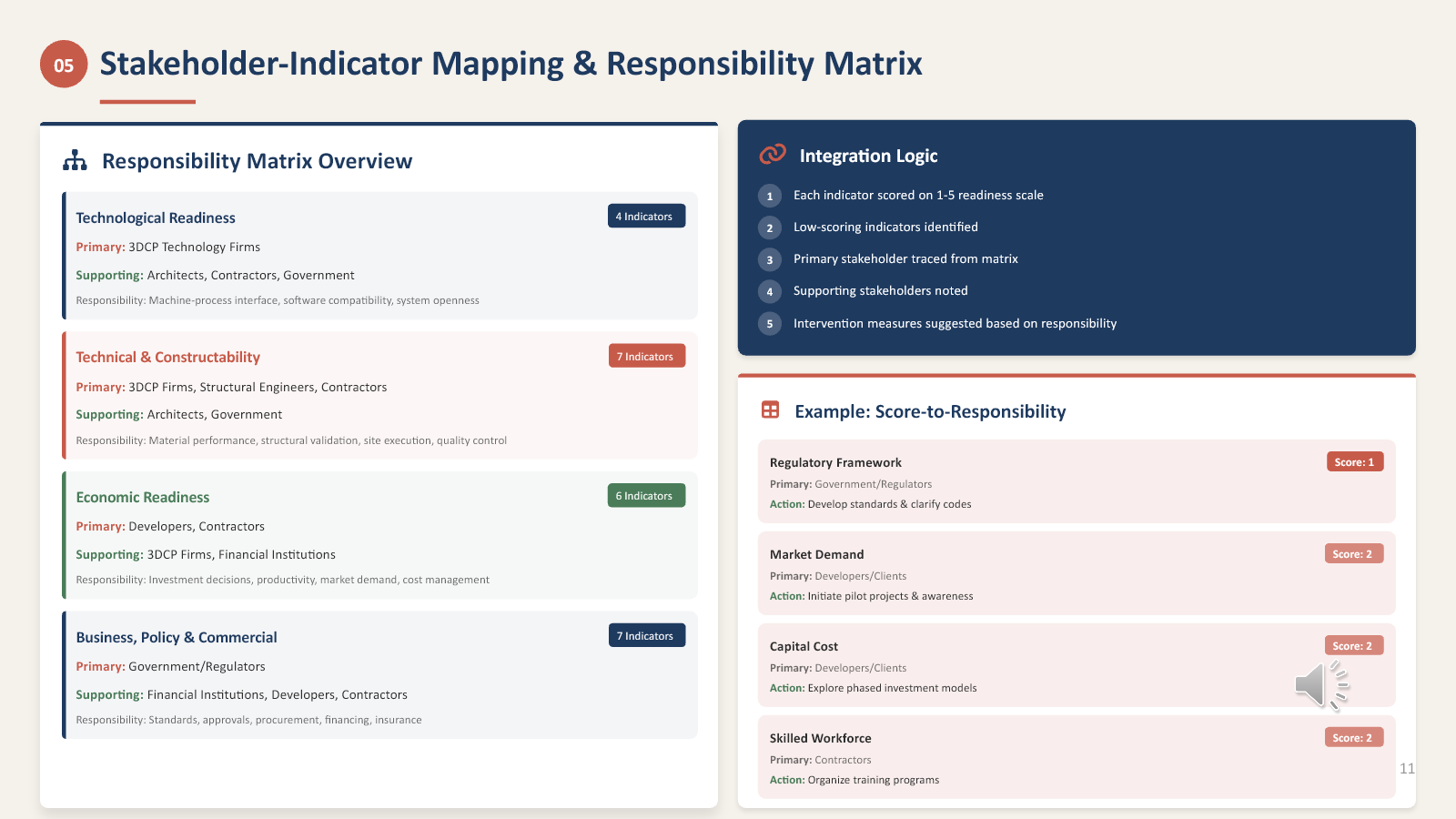
- Stakeholder-responsibility mapping linking gaps with accountable actors
- Intervention logic for moving from assessment results toward action
- Five-layer Barriers and Readiness Assessment Framework
Practical value
Madesai posed the problem of how organisations could distinguish interest in 3D concrete printing from the readiness required for practical adoption. Over the three-month DRP, the research identified 29 interconnected barriers across technical, constructability, economic, and ecosystem conditions. The resulting framework makes those conditions discussable and assessable by connecting readiness indicators with responsible stakeholders and possible interventions. It provides an evidence-led starting point for organisations considering a 3DCP adoption pathway, while recognising that project-specific validation remains necessary.
Responsible boundary
This was an academic Directed Research Project formulated and supervised by Madesai and BIMCrew and completed by a CEPT University MSc student. Madesai did not author the student report or independently validate every empirical claim. The project assessed adoption barriers and readiness. It did not develop a printer, perform structural or material testing, execute prototype construction, certify a 3DCP system, provide project-specific engineering approval, or prove commercial viability for a live project.