Tags
Context
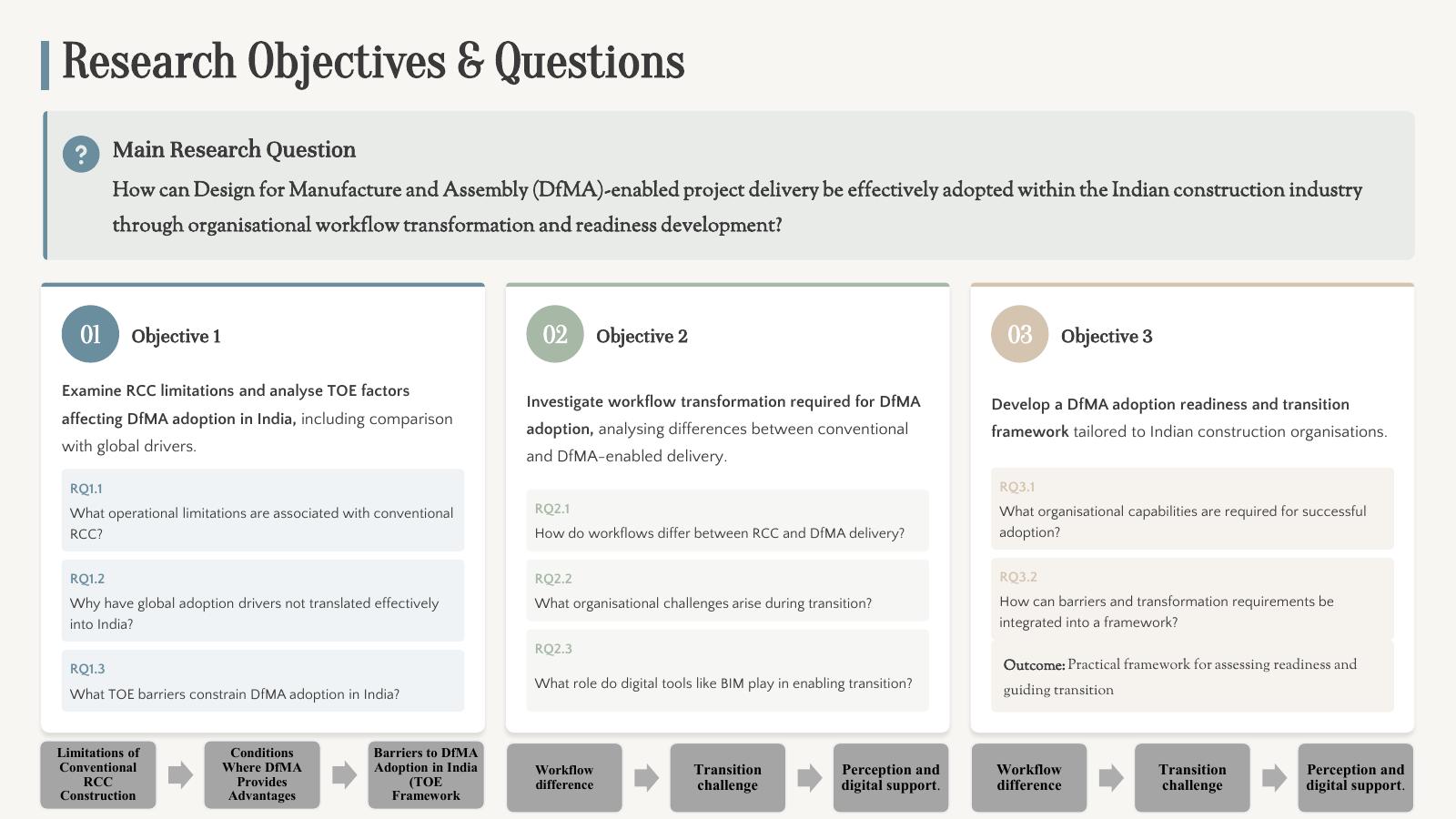
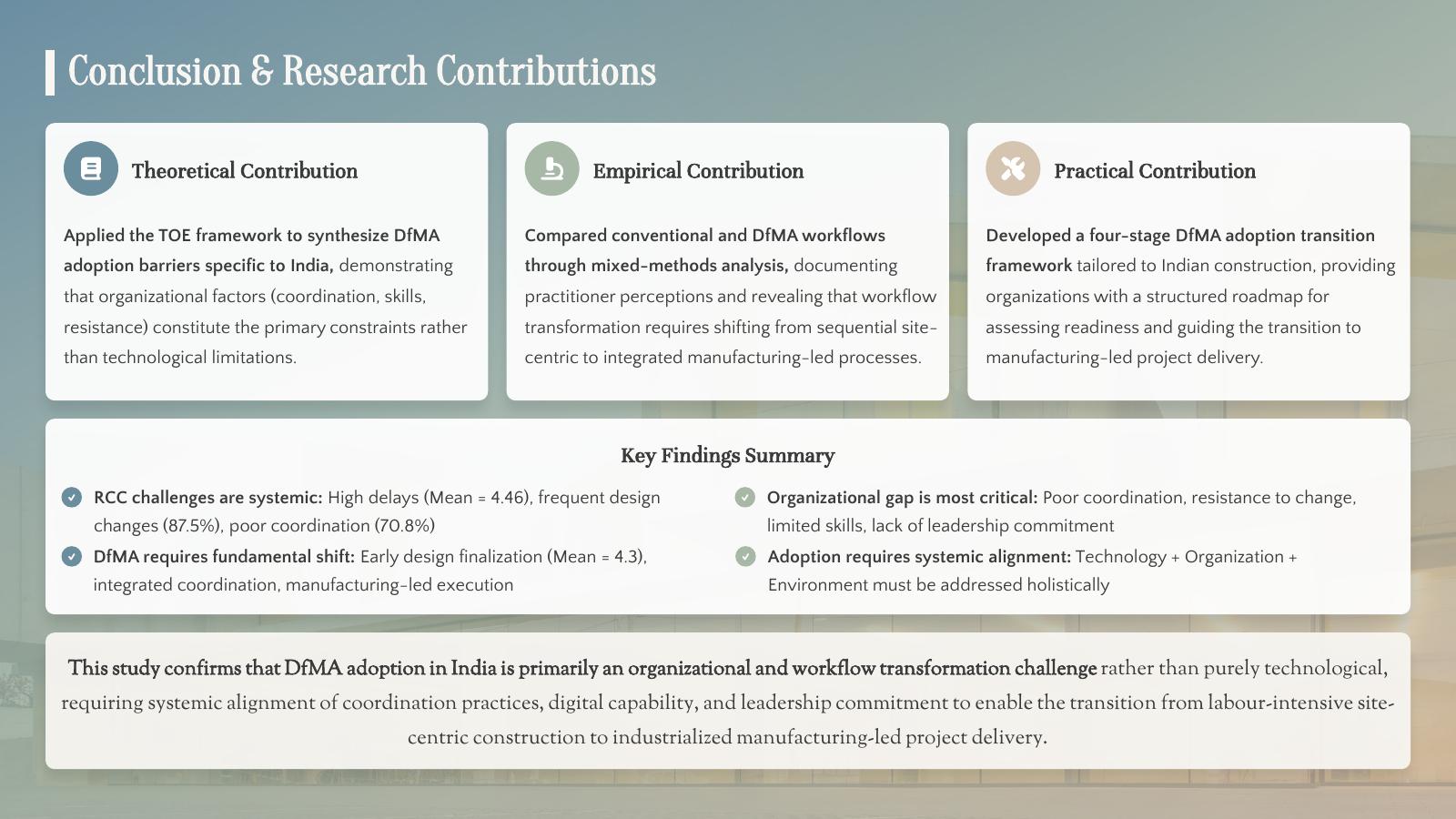
Madesai and BIMCrew formulated this CEPT University MSc Directed Research Project to investigate how Indian construction organisations perceive DfMA, what prevents adoption, and how conventional delivery workflows would need to change. The research was completed by Purvasha Shambhuwani in the Master of Construction Engineering & Management programme. The supervision engagement connected an industrialised-construction topic with a practical research question: what organisational, digital, supply-chain, and workflow conditions are required to move from sequential RCC delivery toward manufacturing-led construction?
The challenge
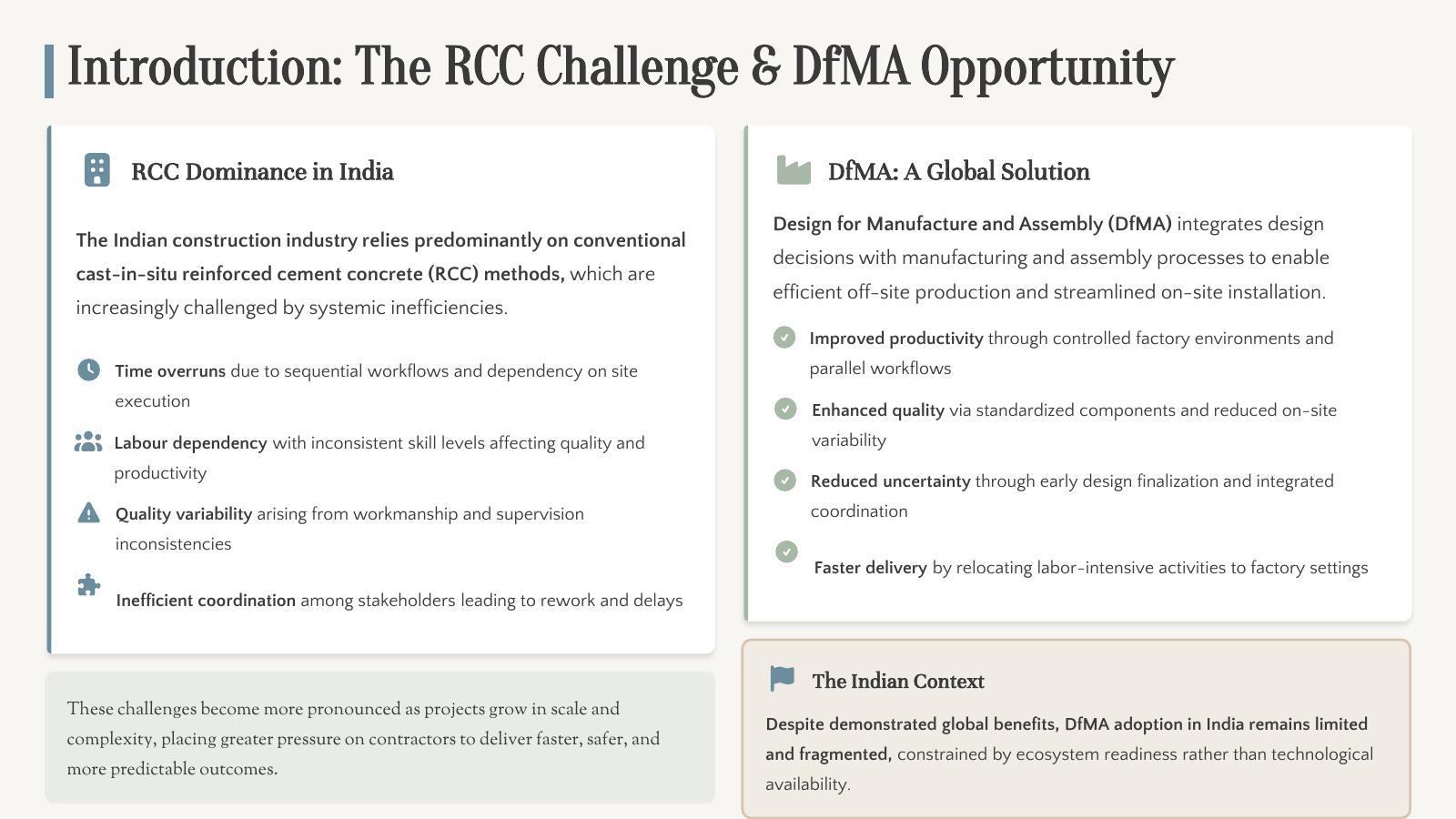
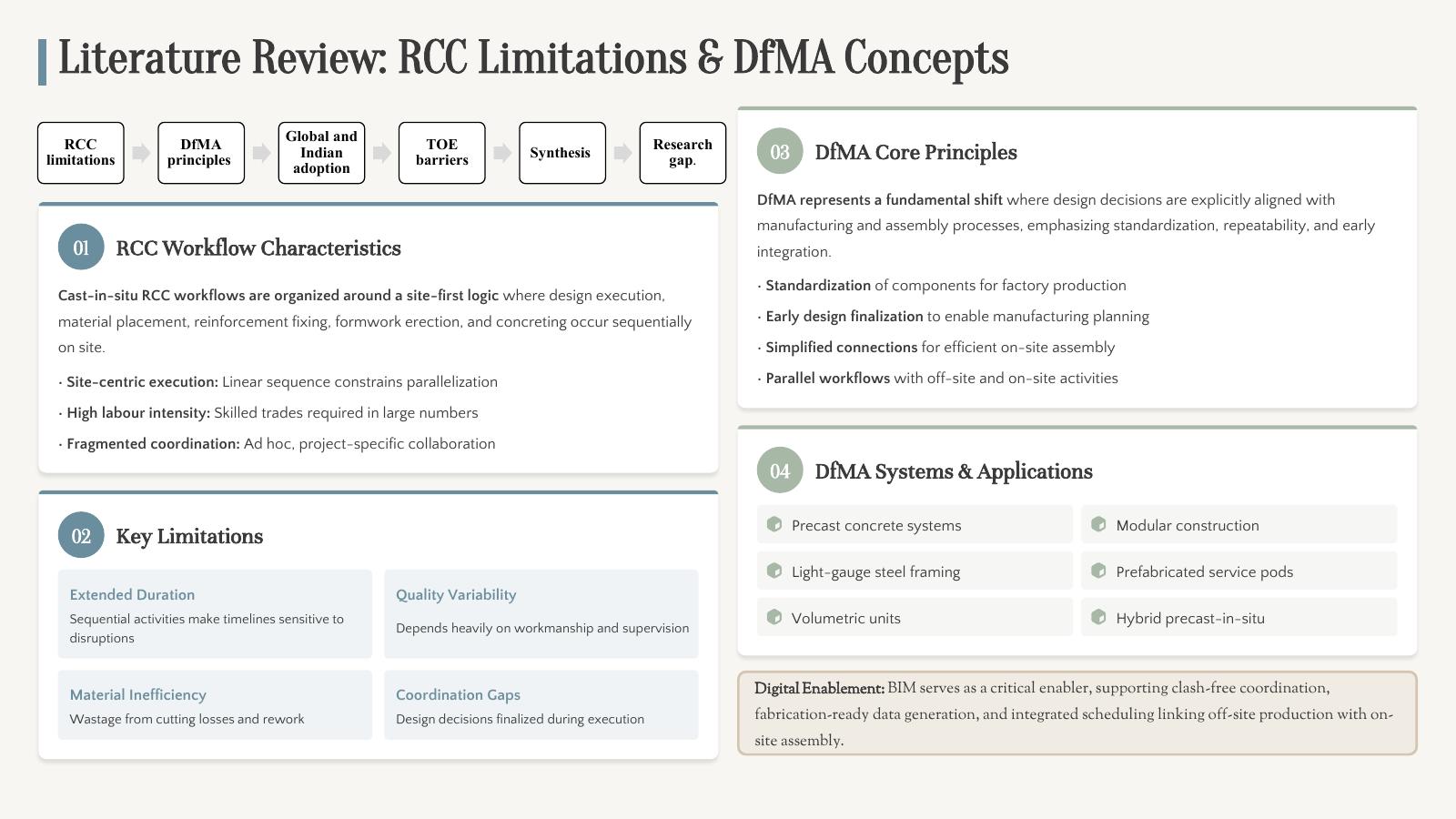
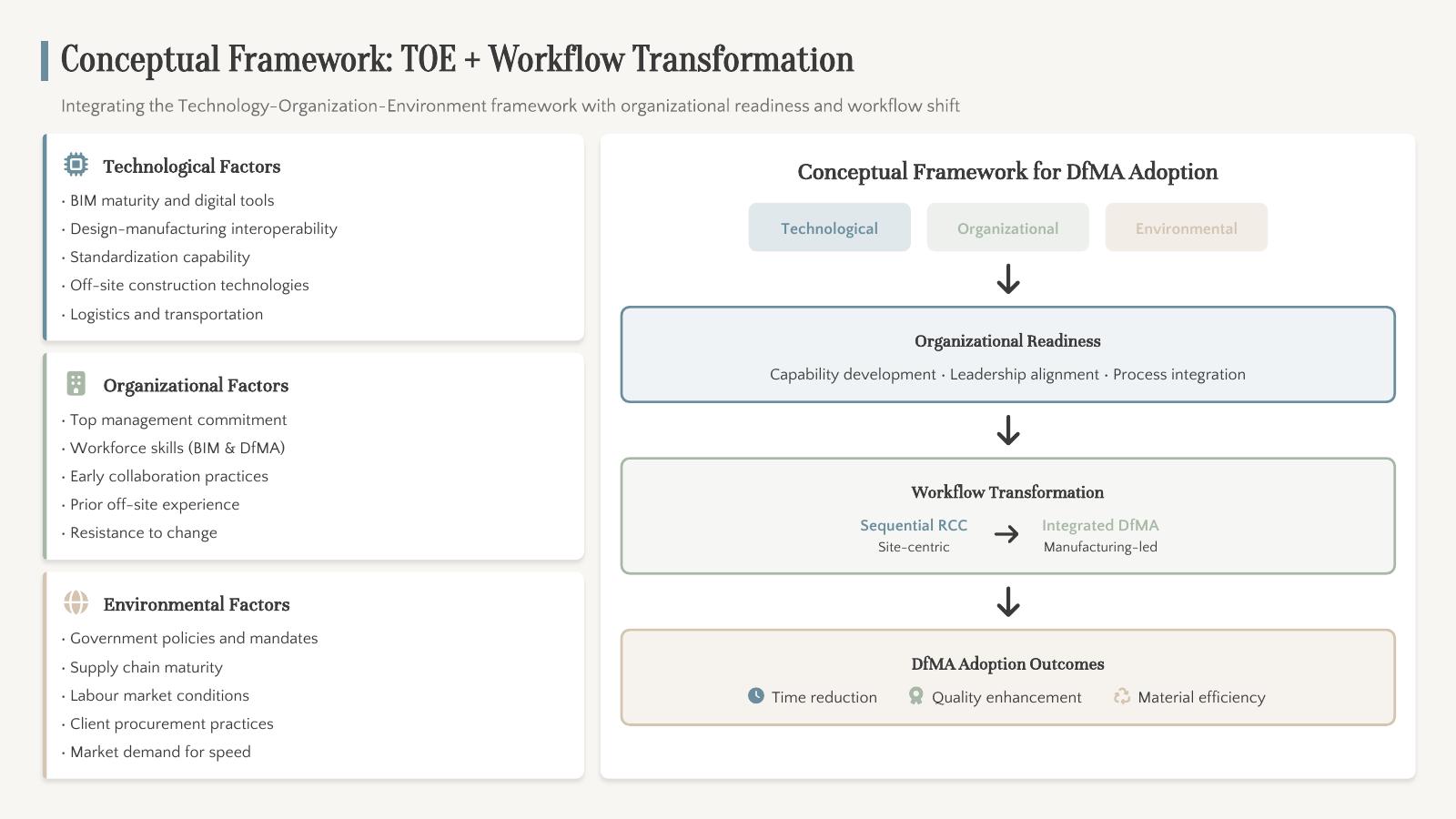
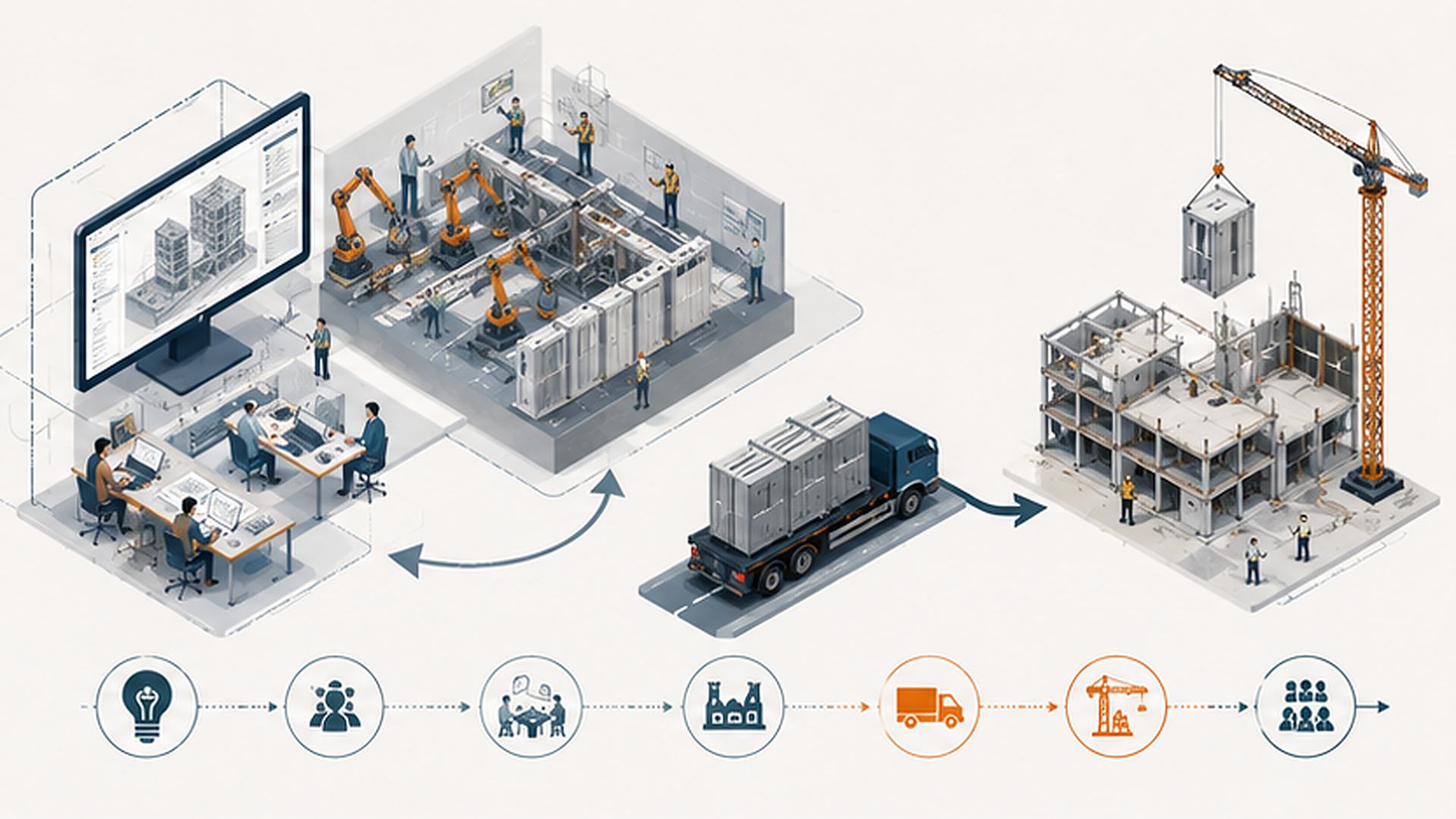
The adoption challenge was not limited to whether DfMA technology exists. Conventional RCC delivery often allows design, coordination, procurement, and site execution to develop sequentially and reactively. DfMA requires earlier design finalisation, manufacturer input, BIM-enabled coordination, production planning, logistics sequencing, and clearer organisational responsibility. The research therefore needed to connect barriers and drivers with the practical transformation of project workflows and organisational capability rather than produce another general list of prefabrication benefits.
MADESAI's role
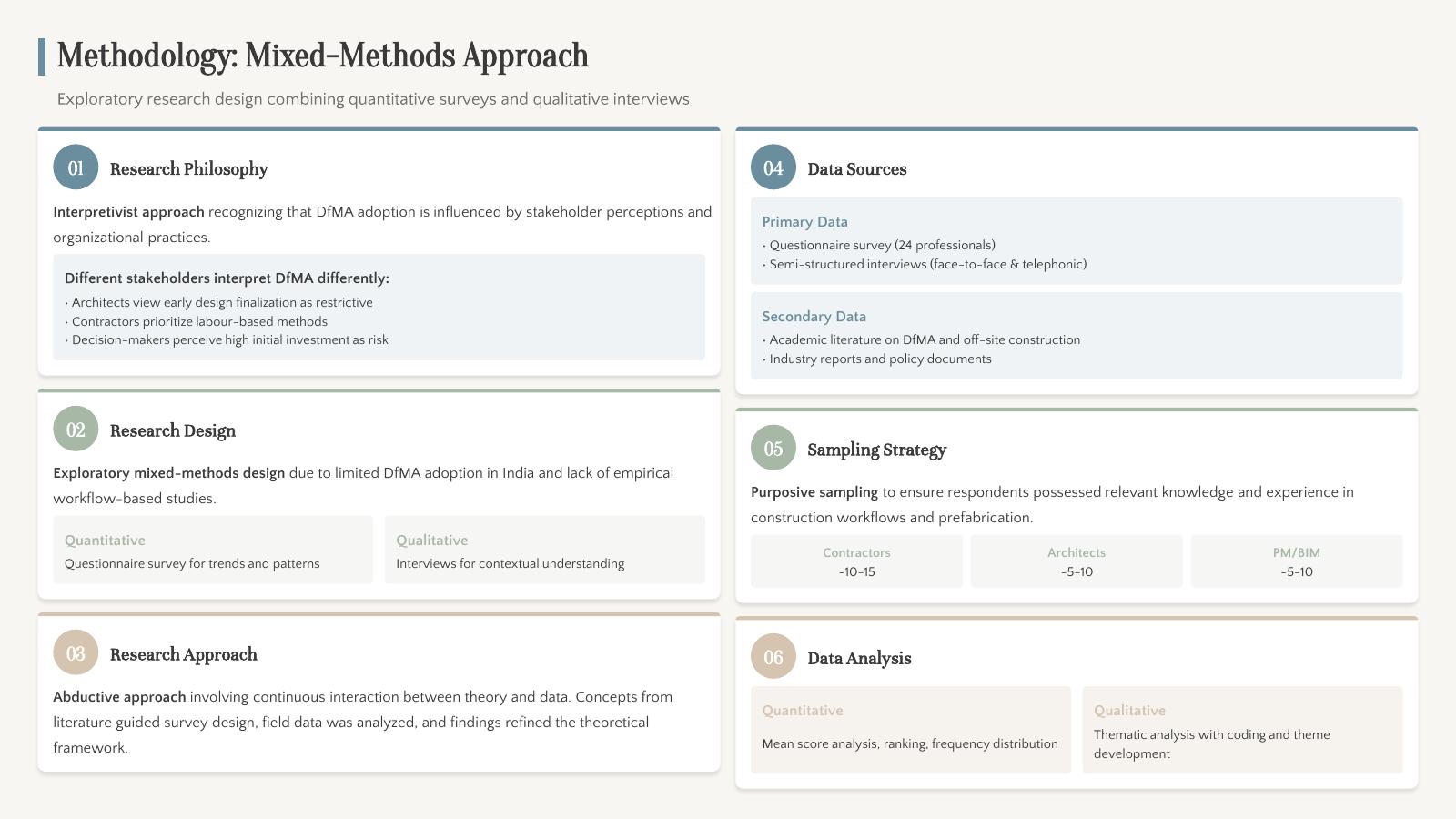
Madesai originated the research problem, translated it into the DRP brief with BIMCrew, and supervised the project through research planning, evidence collection, workflow analysis, framework development, and final academic delivery. Activities included defining the scope and research questions; guiding the Technology-Organisation-Environment methodology; reviewing literature, questionnaire, and interview logic; coordinating recurring progress reviews; reviewing the commencement, interim, qualification, and revised submissions; and directing the comparison of conventional RCC, BIM-enabled, and DfMA-enabled workflows. Madesai also guided the conversion of readiness gaps into a practical four-stage transition roadmap and formally evaluated the research output.
Outputs
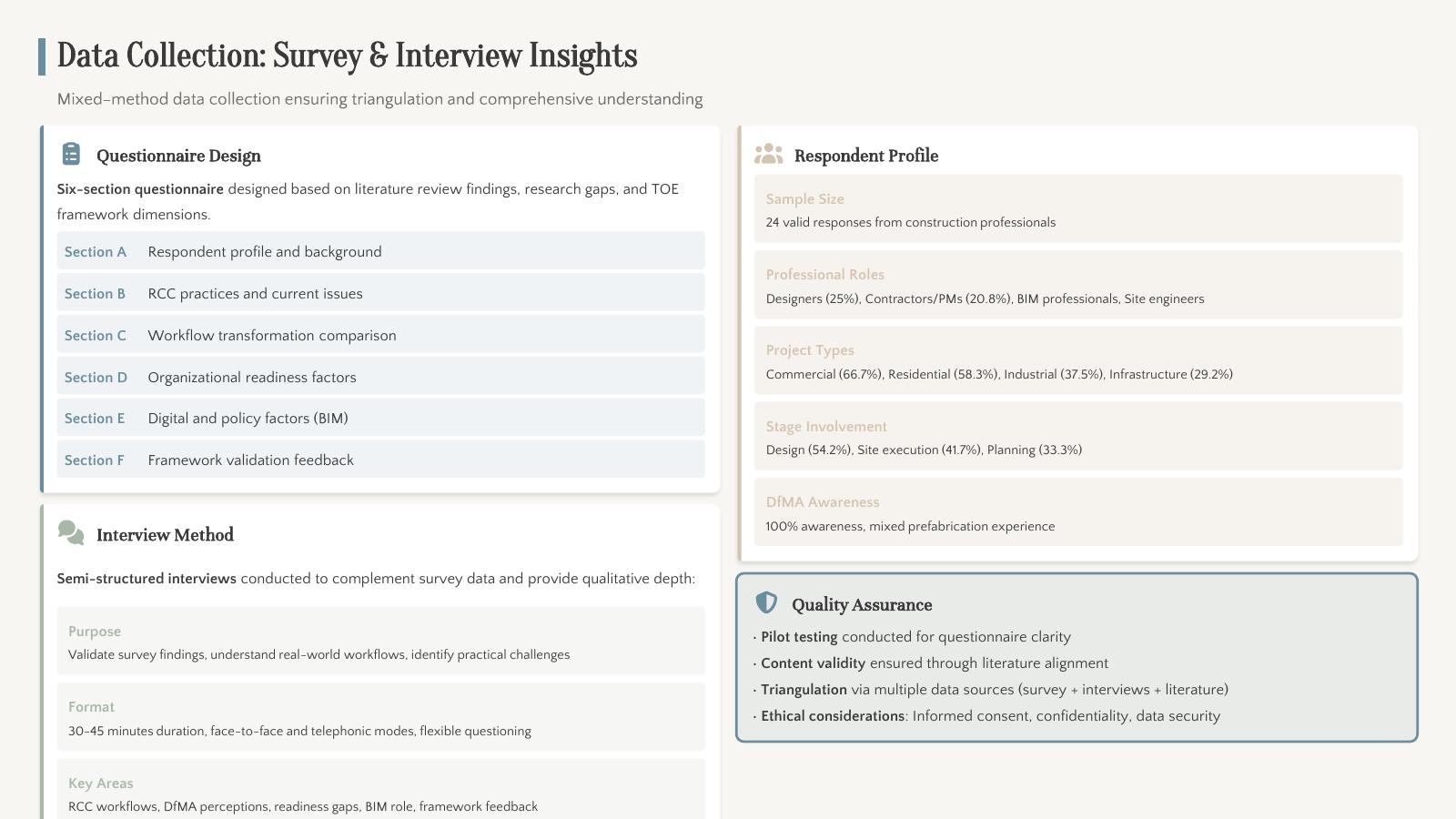
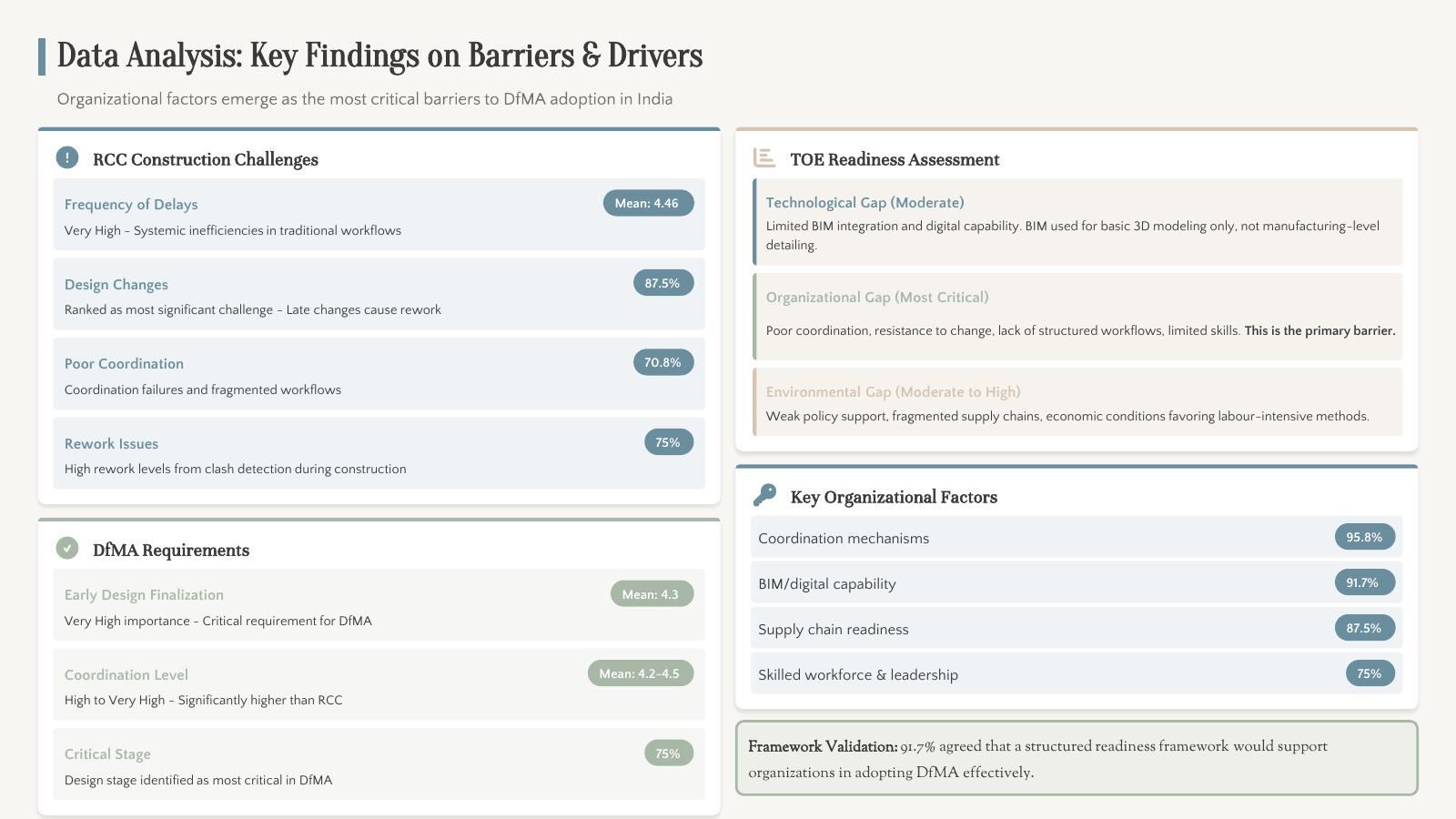
- Industry analysis based on responses from 24 construction professionals
- Assessment of DfMA barriers, drivers, and organisational-readiness factors
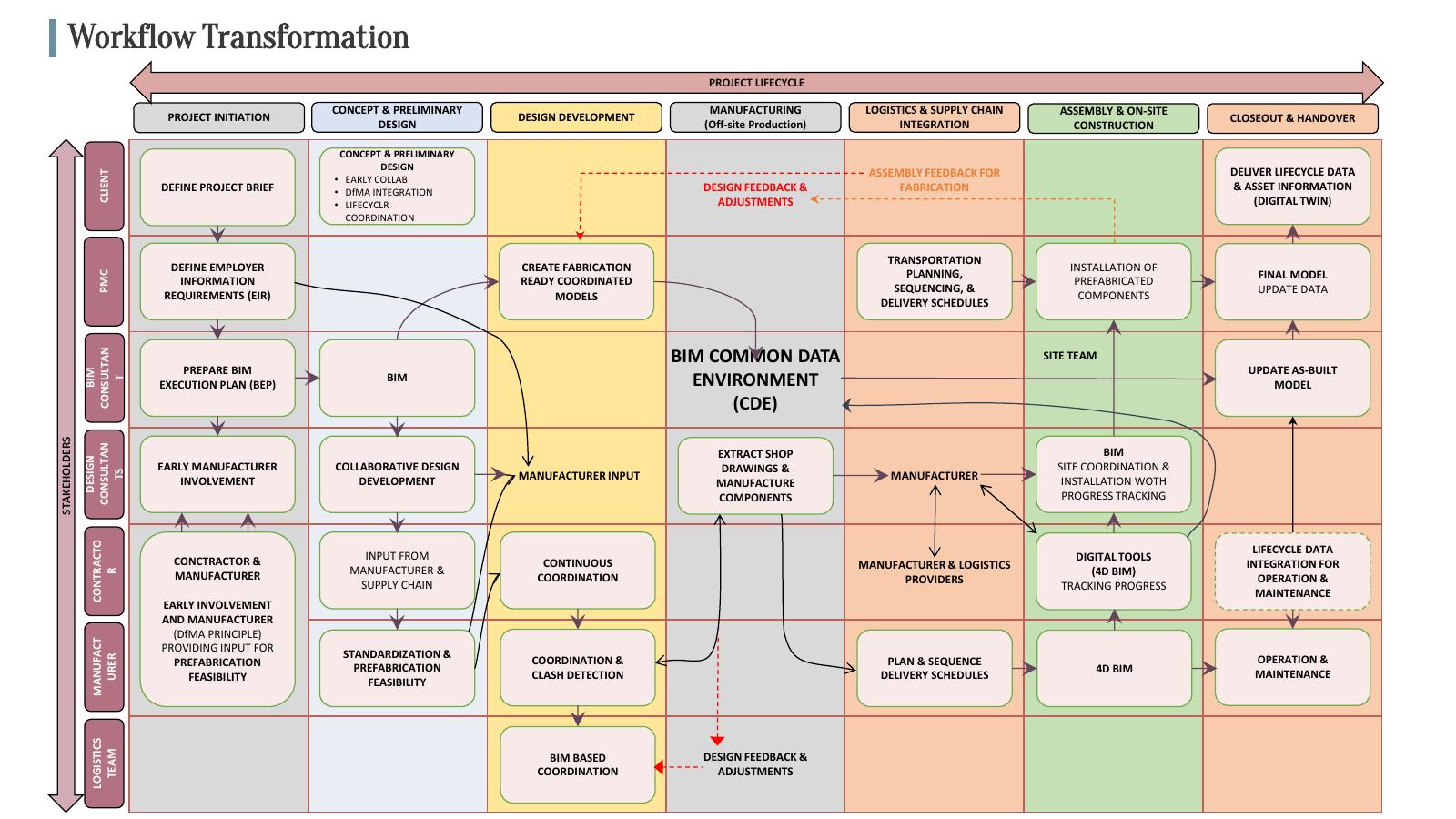
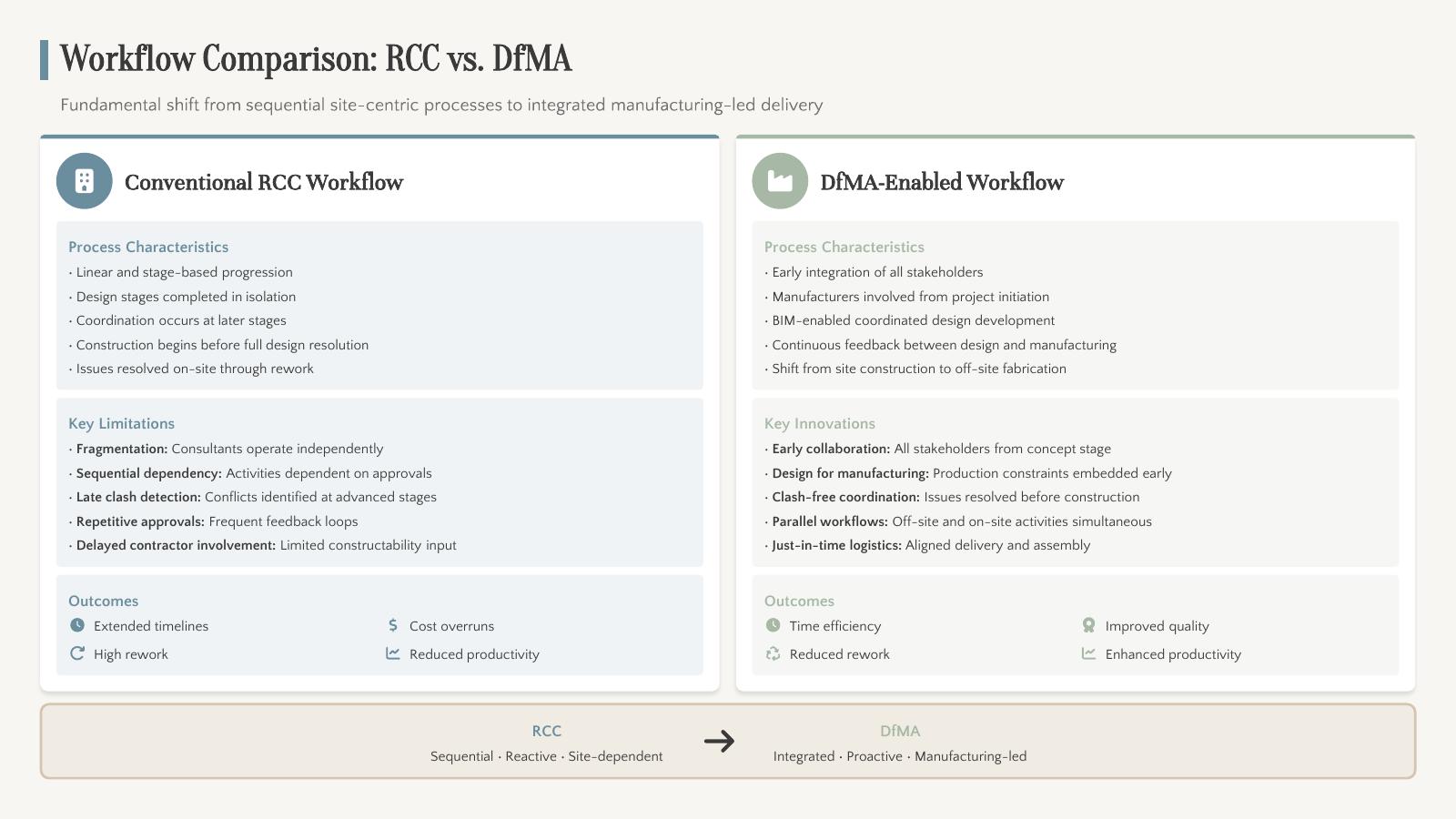
- Comparison of conventional RCC, BIM-enabled, and DfMA-enabled delivery workflows
- Identification of changes required in design coordination, manufacturing input, logistics, and responsibility
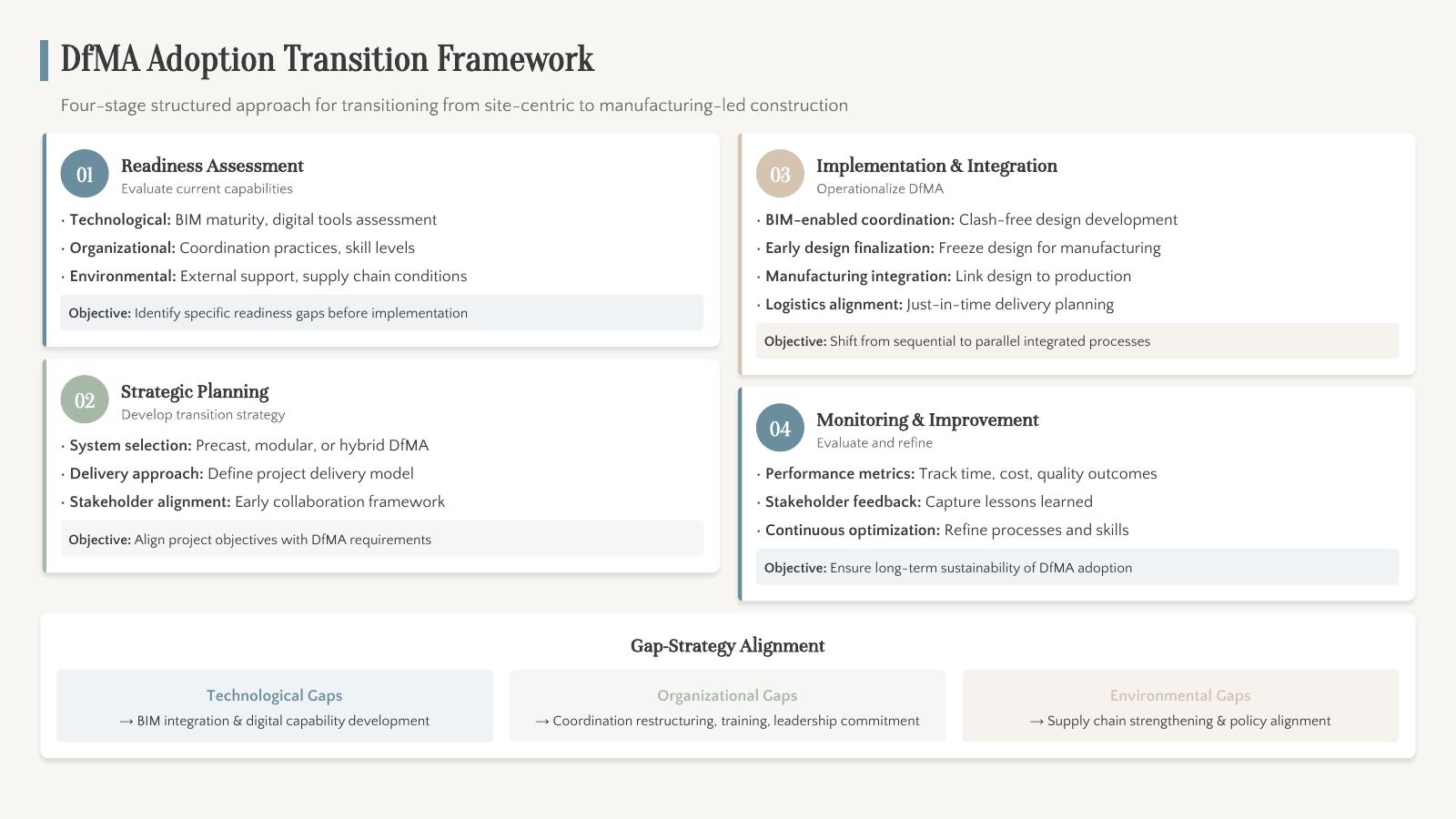
- Four-stage DfMA Adoption Transition Framework covering assessment, planning, implementation, and improvement
Practical value
Madesai posed the problem of what Indian construction organisations would need to change to move from conventional delivery toward DfMA. Over the three-month DRP, the research found that adoption depends not only on prefabrication technology but on earlier design decisions, BIM capability, manufacturer involvement, supply-chain readiness, logistics, and organisational responsibility. The resulting workflow comparison and transition framework help organisations examine the operating-model changes behind DfMA and structure a staged discussion around assessment, planning, implementation, and improvement.
Responsible boundary
This was an academic Directed Research Project formulated and supervised by Madesai and BIMCrew and completed by a CEPT University MSc student. Findings are based on an exploratory sample and should not be treated as representative of the entire Indian construction industry without further validation. The project did not complete detailed structural design, material testing, a full cost-benefit model, physical DfMA implementation, certification, or project-specific engineering approval.