
Tags
Context
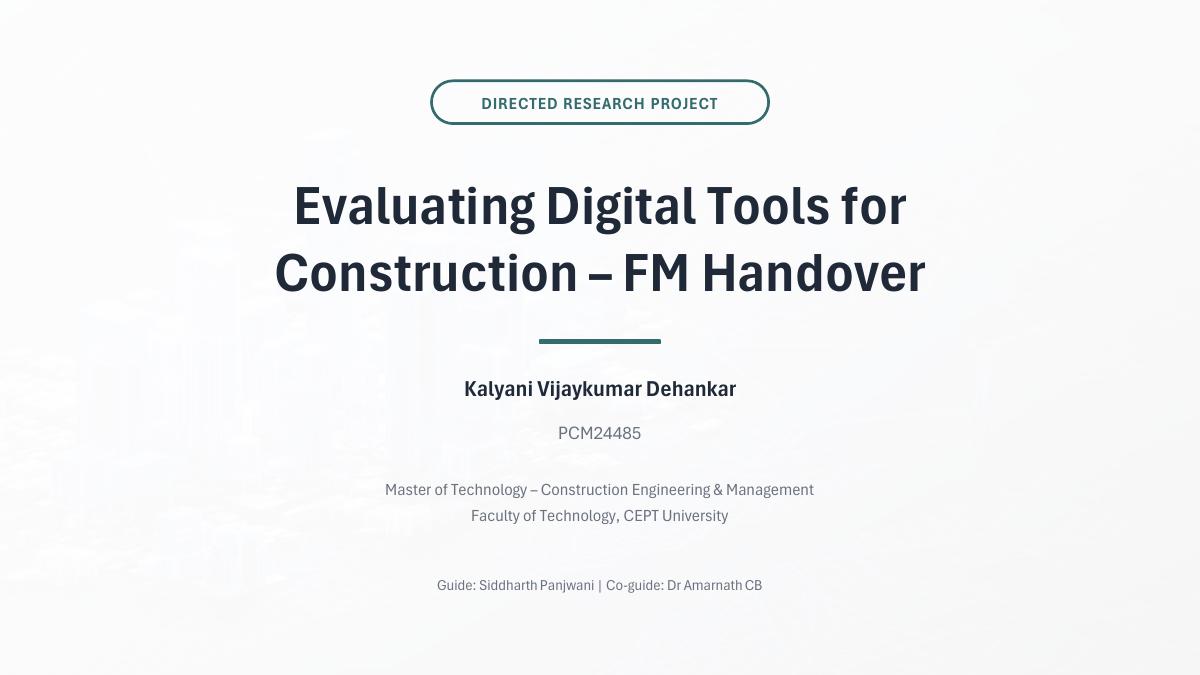
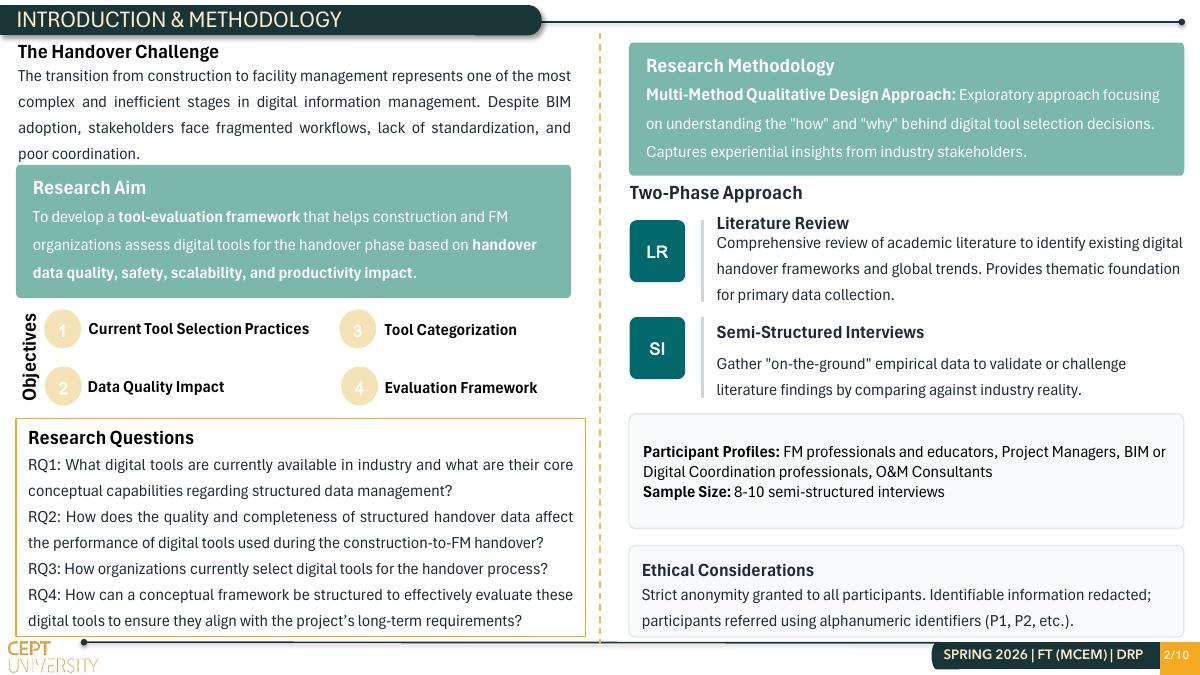
Madesai and BIMCrew formulated this CEPT University MSc Directed Research Project to investigate how construction and facility-management organisations select digital handover tools and how selection could be made more transparent and evidence-based. The research was completed by Kalyani Vijaykumar Dehankar in the Master of Construction Engineering & Management programme. The supervision engagement focused the topic on a practical decision problem: how should teams evaluate tools when performance depends on the handover activity, available information, responsibility chain, organisational maturity, and downstream FM requirements?
The challenge
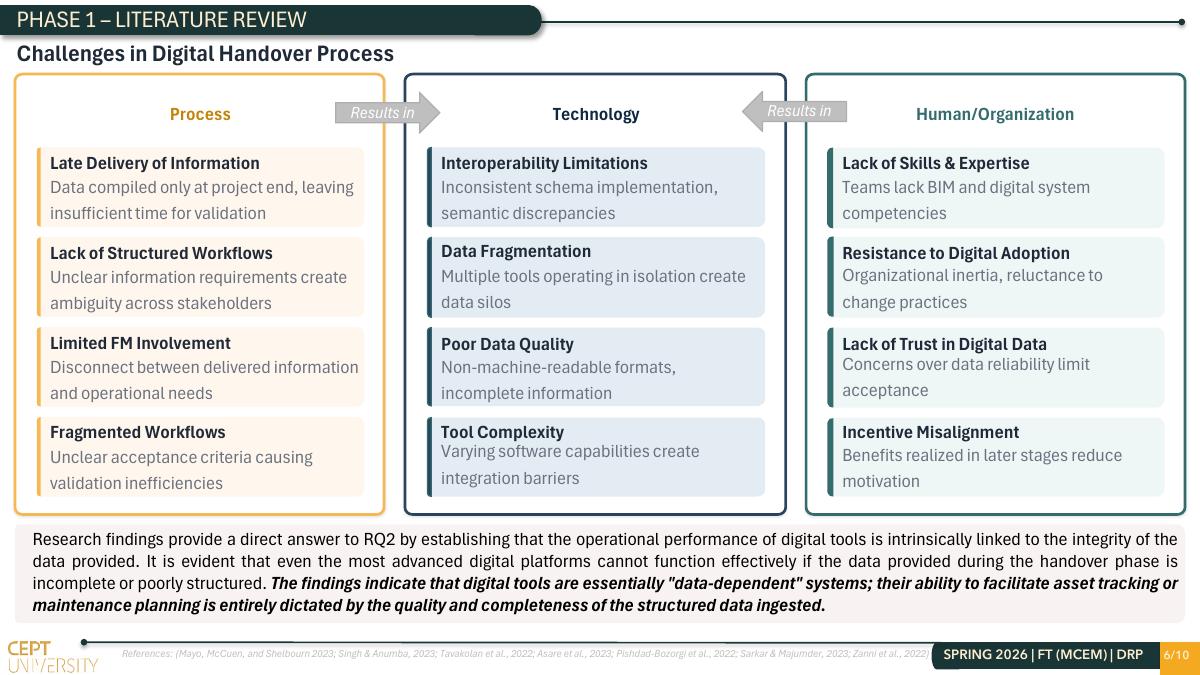
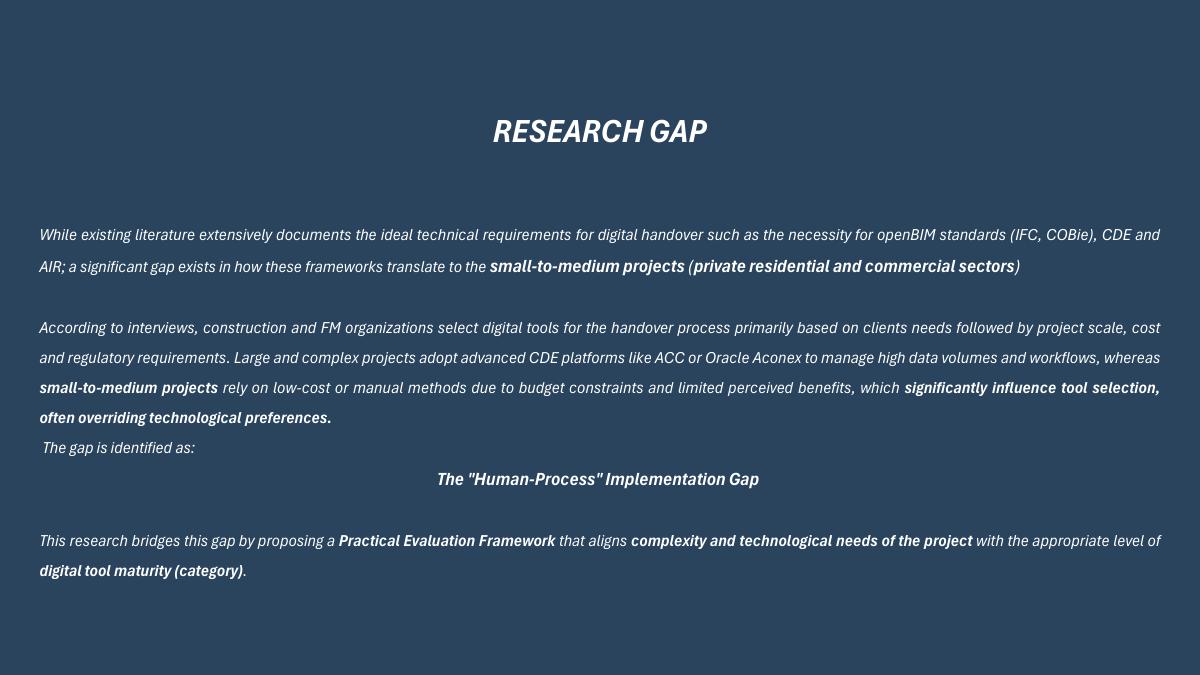
Digital-tool selection often begins with product demonstrations, feature lists, familiarity, or immediate project constraints. This can obscure the more important questions: which handover activity is being supported, what information is required, who creates and checks it, whether the available data is usable, and which capabilities are mandatory in the specific project context. The challenge was to develop an evaluation route that worked across different levels of organisational and market maturity without assuming that every project already operates within an advanced BIM, COBie, CDE, or FM-system environment.
MADESAI's role
Madesai originated the research problem, translated it into the DRP brief with BIMCrew, and supervised the work from the initial research structure through the final evaluation framework. The role included guiding the literature and standards review; coordinating recurring research reviews; supporting practitioner discussions across FM, BIM/VDC, document control, software, and project-management roles; reviewing the commencement and interim submissions; and directing the research gap away from generic software comparison toward activity-specific decision logic. Madesai also reviewed the framework architecture, report development, qualification submission, and final academic delivery.
Outputs
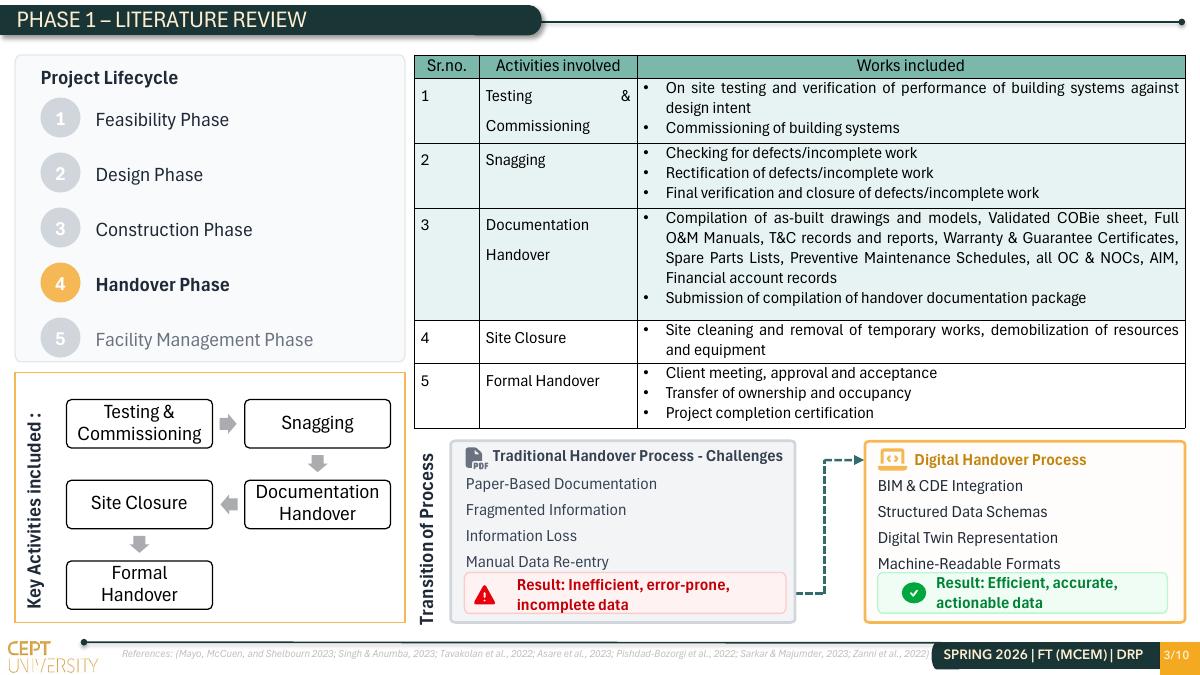
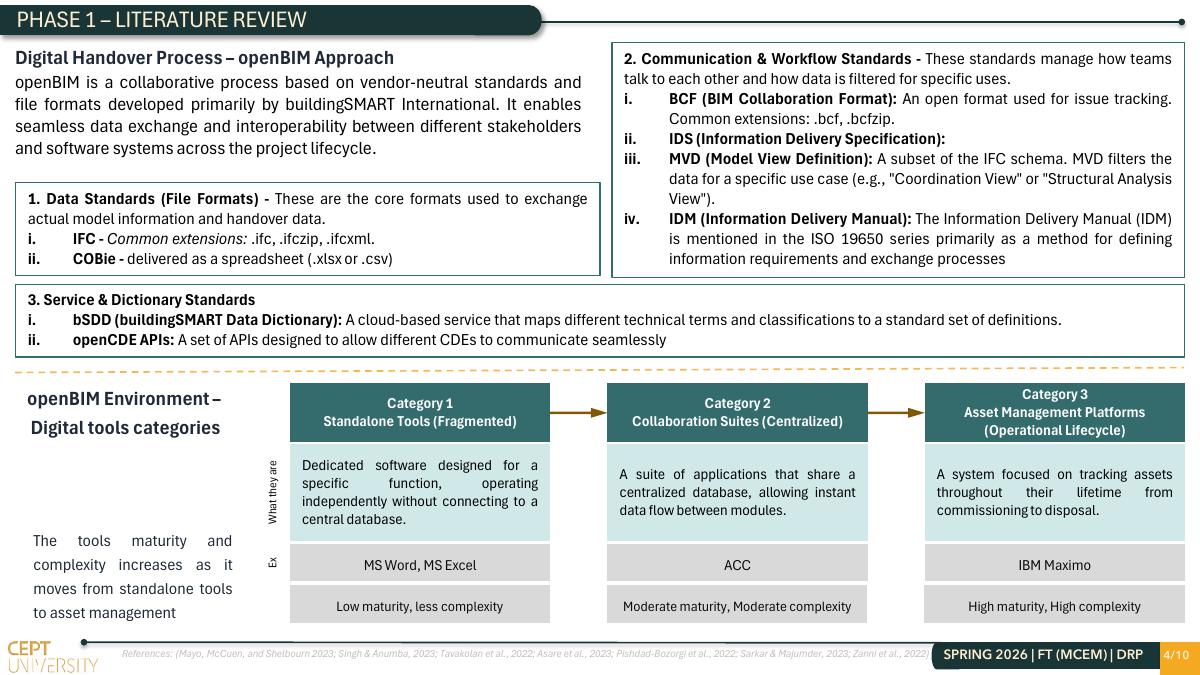
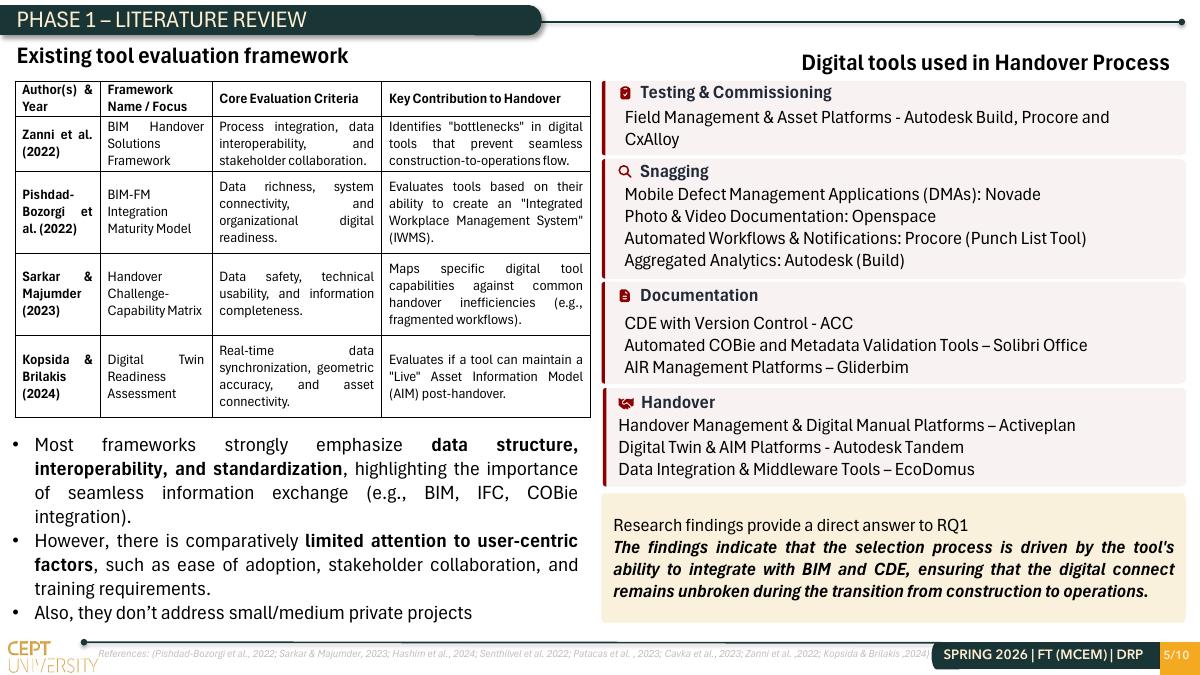
- Review of construction-to-FM handover activities, information requirements, and digital-tool categories
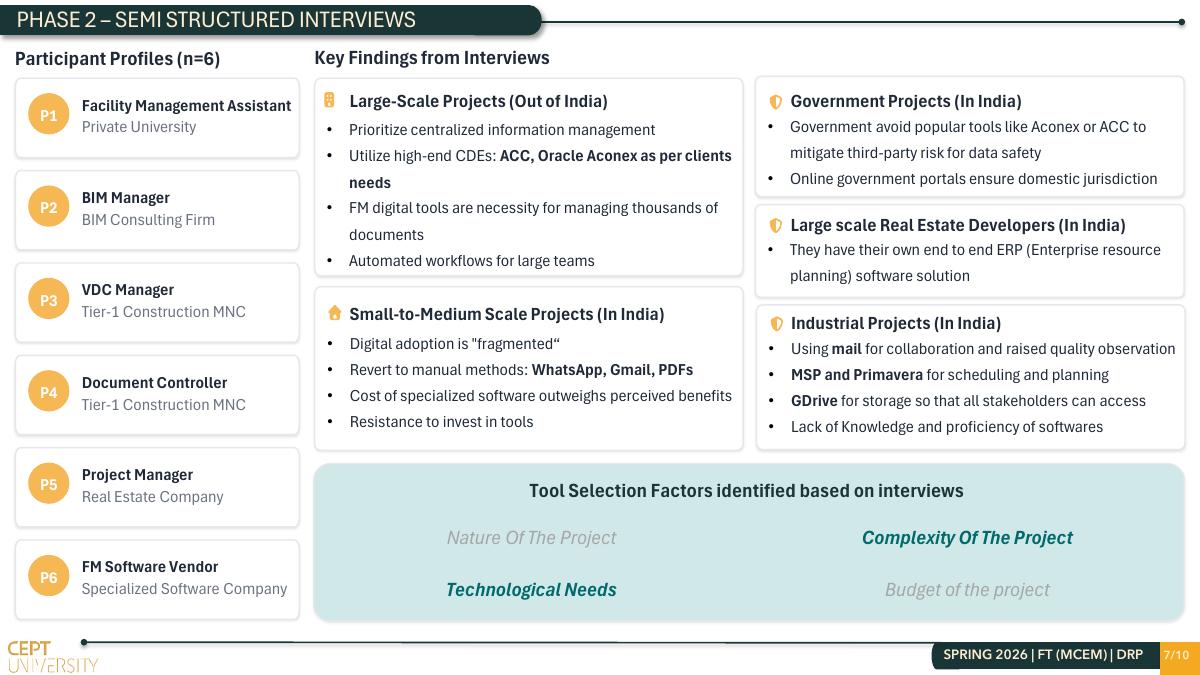
- Practitioner evidence from six interviews across FM, BIM/VDC, document control, software, and project management
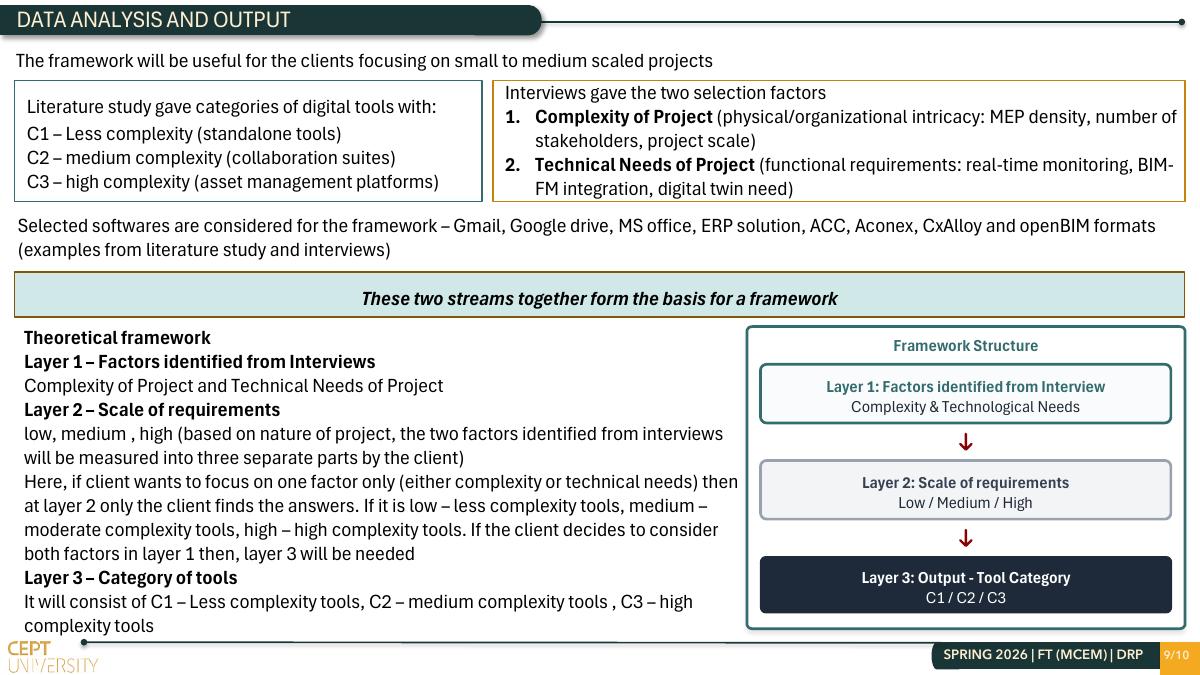
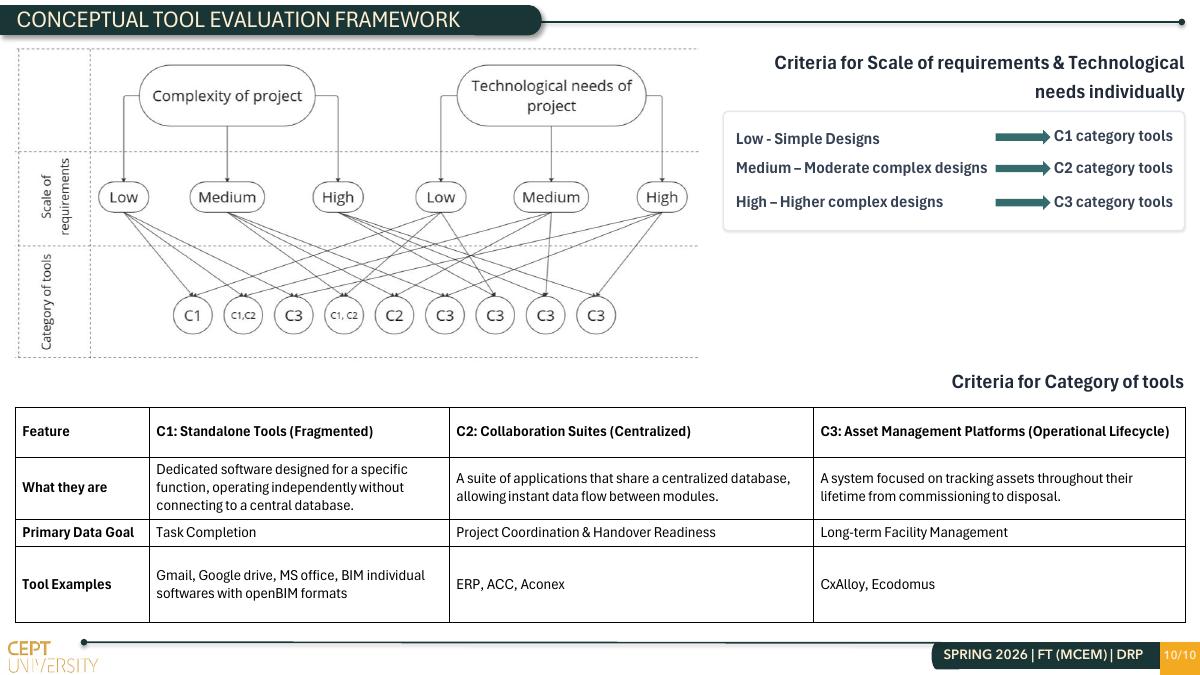
- Activity-first evaluation logic connecting the handover task with required information and responsibility
- Criteria for comparing tool capability with project and organisational context
- Nine-stage Construction-to-FM Handover Tool Evaluation Framework
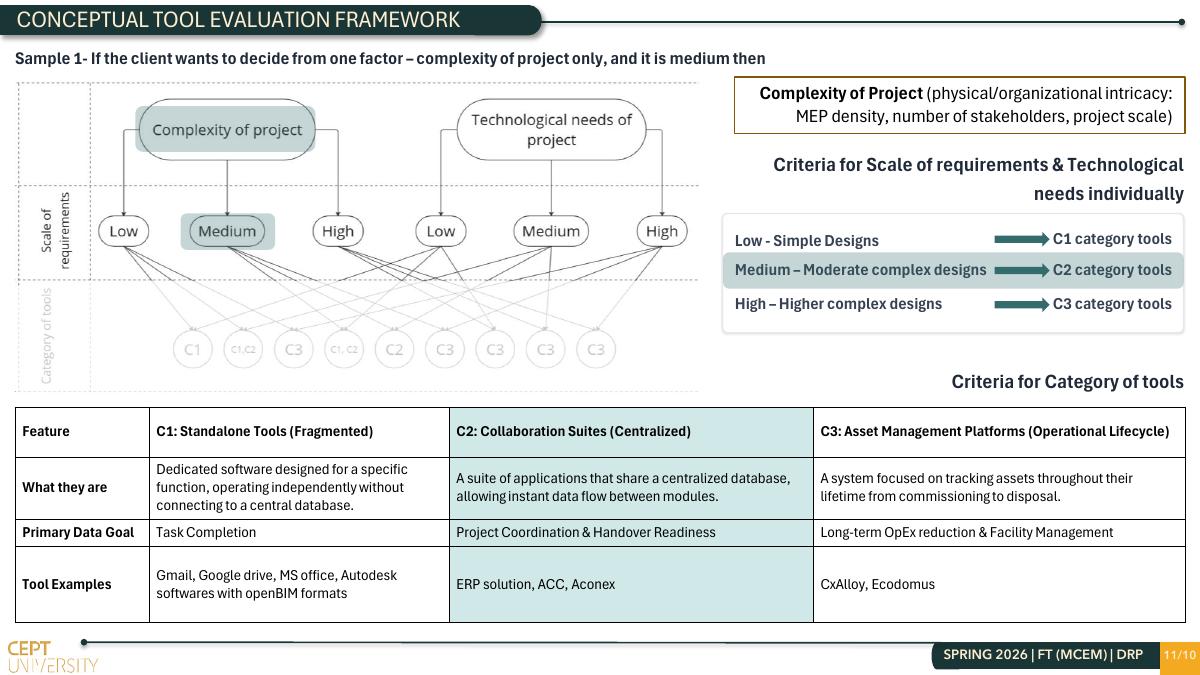
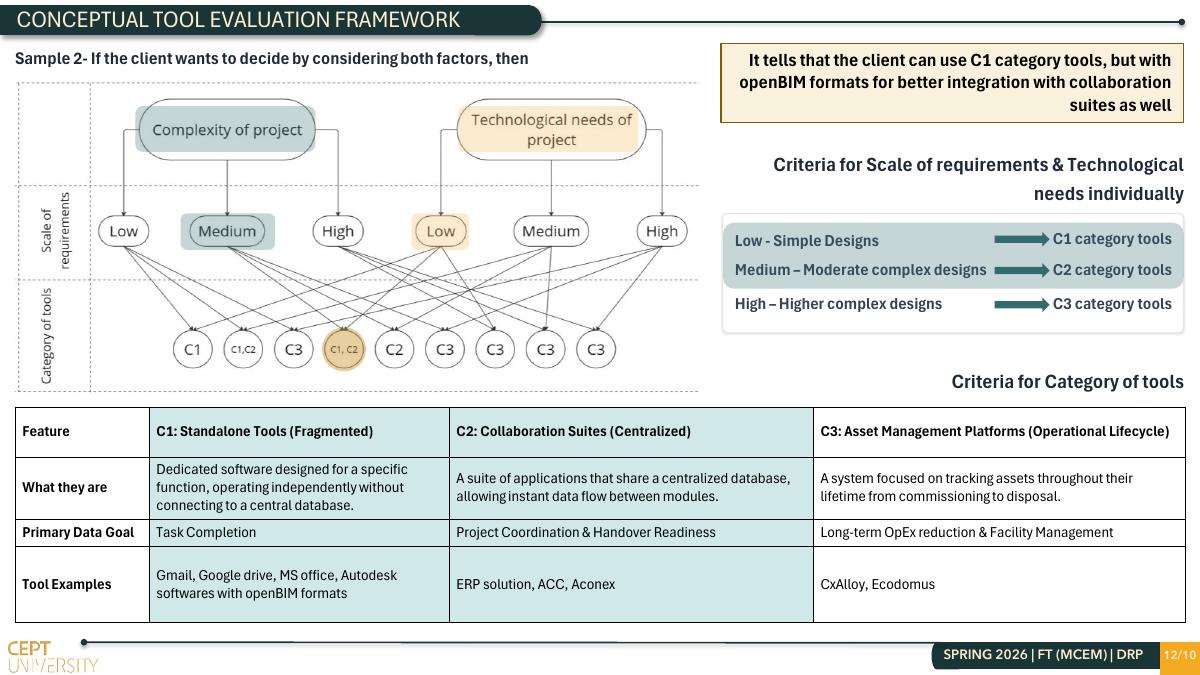
- Worked application demonstrating how the method can support a specific handover activity
Practical value
Madesai posed the problem of how teams should evaluate digital handover tools when product features alone do not establish fitness for use. Over the three-month DRP, the research found that selection needs to begin with the handover activity, required information, responsibility chain, available data, and organisational context. The resulting nine-stage method provides a transparent structure for early tool-evaluation and procurement discussions. It helps teams document why an option appears appropriate for a defined handover use case, while requiring current product capabilities to be verified before selection.
Responsible boundary
This was an academic Directed Research Project formulated and supervised by Madesai and BIMCrew and completed by a CEPT University MSc student. The framework is a conceptual decision-support method based on literature and six practitioner interviews. It did not implement software, conduct a procurement exercise, verify every vendor claim, complete cyber-security testing, or field-test the framework across multiple live projects. Tool capabilities and market availability require current verification before practical use.